STCW Certificates for Yacht Crew: Validity, Renewal and Tracking (2026)
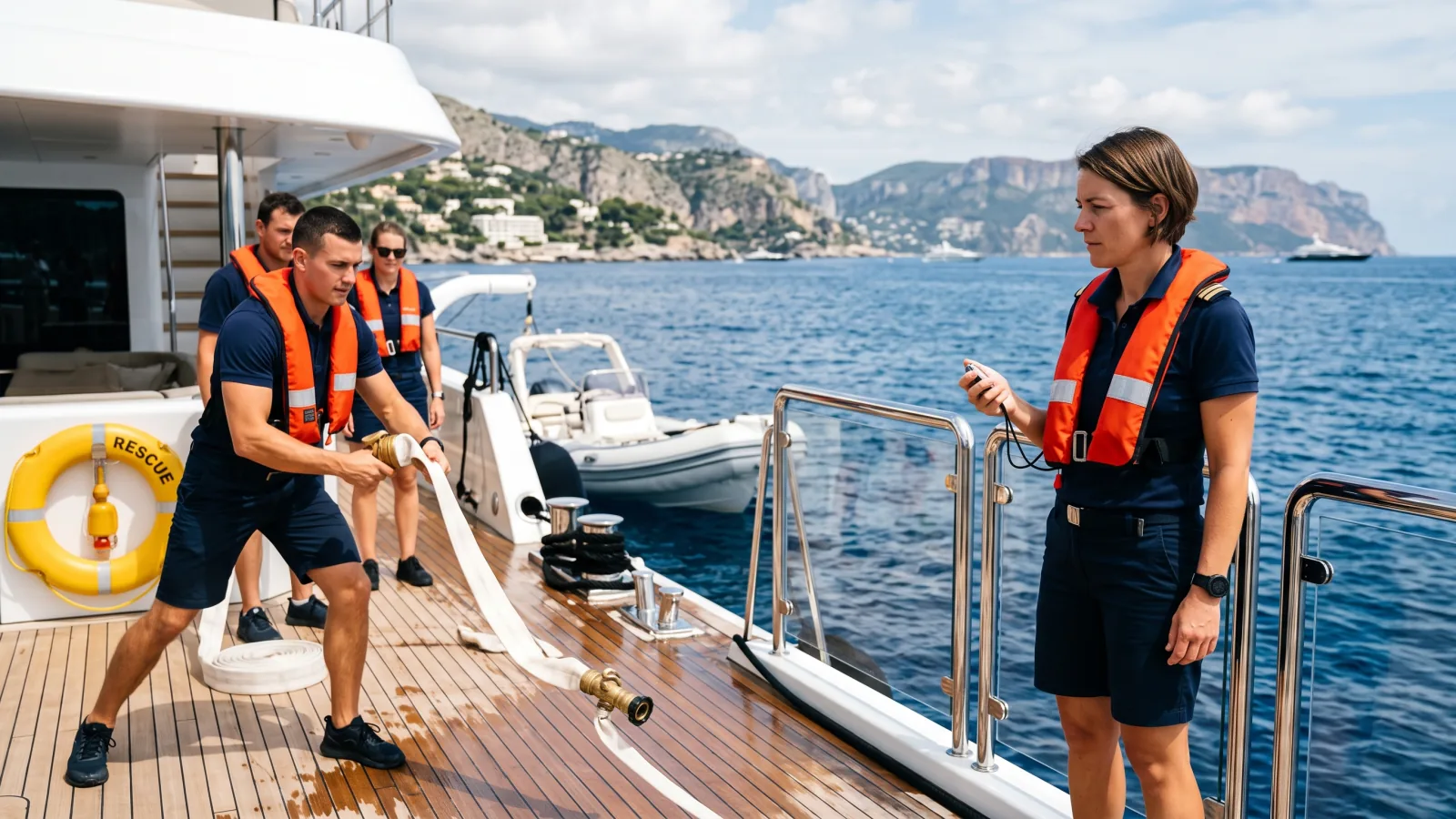
For anyone working on a yacht, the letters STCW appear on almost every job advert, contract and crew list. They are also one of the most common reasons a crew member cannot start a job on time: a certificate that expired last month, a refresher course nobody booked, or a medical that ran out in the middle of the season. This guide explains which STCW certificates yacht crew need, how long each one is valid, how refresher training works, and how captains and managers can track expiry dates for a whole crew without relying on memory.
Key takeaway: most STCW problems are not about training, they are about dates. Every certificate has a validity, every refresher has a deadline, and a crew of ten can easily carry more than a hundred dates between them.
What Is STCW?
STCW is the International Convention on Standards of Training, Certification and Watchkeeping for Seafarers, adopted by the International Maritime Organization (IMO) in 1978. It sets the minimum training and certification standards for people working at sea, and it is applied by the flag states that sign up to it.
The convention was substantially revised by the Manila Amendments of 2010, which entered into force in 2012 with a transition period that ended in 2017. The Manila Amendments are the reason refresher training became a routine part of a crew member's career rather than a one-off event.
For the yachting industry, the practical meaning is simple: on commercially operated yachts, STCW training is effectively a condition of employment, and many private yachts, insurers and management companies expect the same standard from their crew.
Which STCW Certificates Do Yacht Crew Need?
The certificates a crew member needs depend on the role and the size and use of the yacht. There is, however, a common foundation that almost everyone on board starts with.
STCW Basic Safety Training
Basic Safety Training is the entry ticket to working at sea. It is usually delivered as a short course of around five days and is made up of four modules:
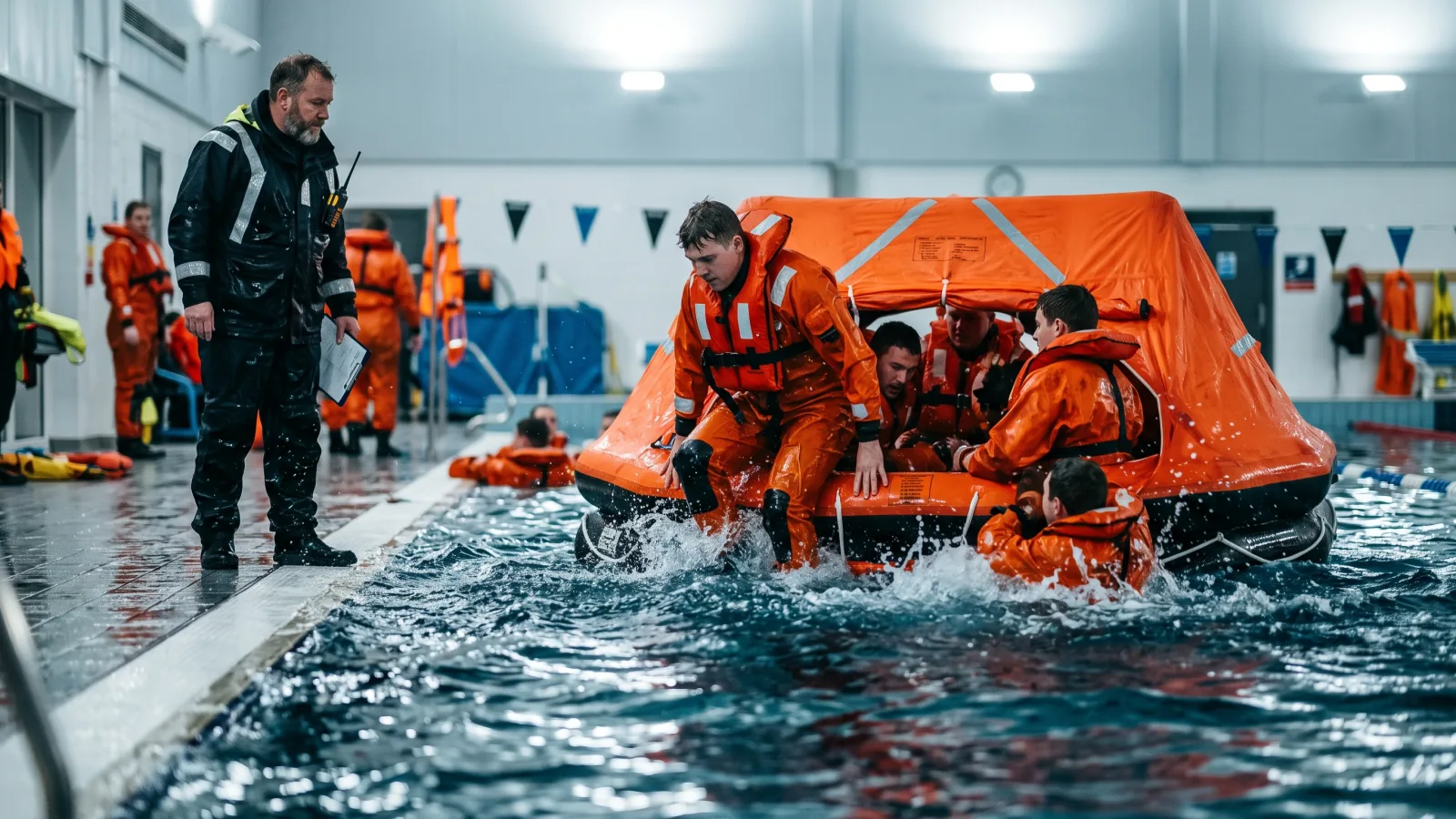
- Personal Survival Techniques (PST): abandoning ship, using life jackets and liferafts, and surviving in the water.
- Fire Prevention and Fire Fighting (FPFF): preventing fires on board, using extinguishers and breathing apparatus, and fighting fires as a team.
- Elementary First Aid (EFA): immediate response to injuries and medical emergencies until professional help arrives.
- Personal Safety and Social Responsibilities (PSSR): safe working practices, communication, fatigue and life on board.
Security Training
Crew are also expected to hold security training. Proficiency in Security Awareness covers the basics for all crew, while Proficiency in Designated Security Duties (PDSD) is required for crew members who are assigned specific security tasks on board. On many yachts, PDSD is requested for every crew member so that duties can be assigned flexibly.
Certificates by Department
Beyond the foundation, each department builds its own set of qualifications:
- Deck: certificates of competency for navigation officers and masters, often issued under yacht-specific grades, plus radio operator certificates for GMDSS equipment.
- Engineering: engineer certificates of competency appropriate to the power and tonnage of the vessel, and approved engine courses.
- Interior and galley: food hygiene and safety certificates for chefs and stewards handling food, and often additional first aid or crowd management training.
How Long Are STCW Certificates Valid?
This is the question behind most crew scheduling headaches. Not every certificate expires in the same way, and some never need renewing at all. The table below summarises the typical picture; always confirm the exact requirements with the flag state and the issuing authority.
| Certificate | Typical validity | How it stays valid |
|---|---|---|
| Personal Survival Techniques | 5 years | Refresher training |
| Fire Prevention and Fire Fighting | 5 years | Refresher training |
| Elementary First Aid | No refresher required under STCW | Some employers ask for recent training |
| Personal Safety and Social Responsibilities | No refresher required under STCW | One-off course |
| Certificates of competency (officers) | Up to 5 years | Revalidation with sea service or training |
| Seafarer medical certificate | Up to 2 years | New medical examination |
Refresher Training Explained
Refresher training is the mechanism STCW uses to prove that safety skills have not faded. For Personal Survival Techniques and Fire Prevention and Fire Fighting, crew must demonstrate continued competence at least every five years, which in practice means completing a shorter refresher course before the deadline.
The refresher is not a formality. It includes practical exercises, and a crew member who lets the deadline pass may need to arrange the course urgently before joining a vessel. Booking refreshers early matters, because courses in popular yachting hubs fill up quickly before the Mediterranean and Caribbean seasons.
Certificates of Competency and Revalidation
Officers and engineers hold certificates of competency that are typically valid for up to five years. Revalidation normally requires evidence of recent sea service or additional training. Because sea service has to be documented, accurate records of time on board are just as important as the certificates themselves.
Medical Certificates: The Date Most Often Forgotten
Every seafarer needs a valid medical fitness certificate. On yachts working under the Red Ensign and many other flags, the ENG1 issued by a doctor approved by the UK Maritime and Coastguard Agency is widely recognised, and other flag states accept equivalent medicals.
Under the Maritime Labour Convention, a medical certificate is valid for a maximum of two years, and for seafarers under 18 the maximum is one year. Because the medical has the shortest validity of all the core documents, it is the one that most often lapses without anyone noticing.
Flag State Endorsements
Certificates are issued by a national administration, but yachts sail under many different flags. When a crew member's certificate of competency was issued by one country and the yacht is registered in another, the flag state may require an endorsement recognising that certificate before the officer can serve in that capacity.
Endorsements have their own validity and paperwork, and they usually take time to process. For captains building a crew for a new season, checking endorsement requirements early avoids last-minute surprises when a new officer arrives with a certificate the flag does not yet recognise.

Hours of Rest: The Other Side of Crew Compliance
Certificates prove that crew are trained. Hours of rest records prove that they are fit to work safely. The Maritime Labour Convention sets minimum rest standards that apply alongside STCW requirements:
- At least 10 hours of rest in any 24-hour period.
- At least 77 hours of rest in any 7-day period.
- Rest may be split into no more than two periods, one of which must be at least six hours long.
- The interval between consecutive rest periods must not exceed 14 hours.
On a busy charter week, these limits are easy to break without noticing. Recording rest hours daily, rather than reconstructing them at the end of the month, is the only reliable way to stay compliant.
A Practical Certificate Map by Crew Position
Crew members often ask what they actually need for their next job, and captains need the same answer when checking a new hire. The map below is a practical starting point for yachts. It is not a substitute for the flag state's requirements, which always have the final word, but it shows how certificates build up over a career.
Entry-Level Deckhand or Steward
A crew member joining the industry typically needs:
- STCW Basic Safety Training, all four modules.
- Security training, often Proficiency in Designated Security Duties.
- A valid seafarer medical certificate, such as the ENG1.
- A passport and any visas required for the cruising area, plus a way to record sea service from the first day on board.
Deckhands frequently add powerboat and tender driving qualifications, while stewards and stewardesses often add food hygiene and interior service training.
Officers and Captains
Moving up on deck means adding certificates of competency that match the size of the yacht, radio operator certificates for GMDSS equipment, and advanced safety and medical training. Every step up depends on documented sea service, which is why officers keep careful records from the very beginning of their careers.
Engineers
Engineering careers follow their own ladder of certificates based on the power and tonnage of the vessel, combined with approved engine courses and sea service in the engine room. For engineers, the revalidation of certificates of competency and the recording of sea time are the two dates that most often need attention.
Chefs
Yacht chefs hold the same Basic Safety Training as the rest of the crew, plus food safety and hygiene certificates. On larger yachts and those operating commercially, the level of food safety certification expected is usually higher.
Planning a Crew Training Calendar for the Season
The best time to deal with certificates is before the season starts, not when a crew member is due to join. Captains and crew managers who plan training as a calendar, rather than reacting to expiries, avoid most of the stress. A simple annual routine looks like this:
- Three to four months before the season, list every certificate that expires during the coming season or shortly after it.
- Book refresher courses and medicals during the quieter period, when training centres have availability and the yacht can spare the crew member.
- Check flag state endorsements for any new officers joining for the season.
- Collect scanned copies of every renewed certificate as soon as it is issued.
- Review the list again mid-season, so certificates that expire over the winter are booked in time.
This routine takes a few hours per season. The alternative, discovering an expired certificate the week before a charter, typically costs far more in urgent bookings, travel and disrupted plans.
What Happens When a Certificate Expires?
An expired certificate is more than an administrative problem. Depending on the flag, the type of yacht and the role, the consequences can include:
- A crew member who cannot legally perform their role until the certificate is renewed.
- Findings during a port state control or flag inspection, which can delay a departure.
- Questions from insurers after an incident, if crew were not properly certificated.
- Charter disruption, when a yacht cannot sail with the required crew complement.
- Unplanned costs for urgent courses, travel and temporary replacements.
Almost all of these situations are preventable with a clear view of upcoming expiry dates, reviewed regularly by someone responsible for crew administration.
How to Track Crew Certificates Properly
Every yacht tracks certificates somehow. The question is whether the method scales with the size of the crew and survives a change of captain. A reliable approach has five elements:
- One record per crew member, with every certificate, its number, issue date and expiry date.
- A scanned copy of each document, stored centrally rather than in personal email inboxes.
- Automatic reminders at 90, 60 and 30 days before expiry, so there is time to book courses.
- A crew-wide view showing everything that expires in the coming months, sorted by date.
- Sea service and rest hours recorded alongside certificates, because revalidation depends on them.
Spreadsheets Versus Crew Management Software
A spreadsheet can hold the data, but it cannot send a reminder, attach a document or warn anyone that a medical expires next week. It also tends to live on one person's laptop. Crew management software keeps the records with the yacht and makes deadlines visible to everyone who needs to act on them.
The SupaSailing Fleet module includes crew administration designed for this job:
- Crew profiles with roles, embarkation periods and contact details.
- Certificates and documents with expiry dates and automatic alerts.
- Rotations and schedules, so the crew list for next month is known in advance.
- Shared access for captain, management company and owner's office.
For professional associations that need to verify their members' qualifications, the Guild module keeps a register of certificates such as STCW and medicals with expiry reminders for the association's staff. And if crew safety is on your agenda, our guide to ISM Code compliance covers the management-system side of the same topic.
Frequently Asked Questions
Do STCW Basic Safety Training certificates expire?
Two of the four modules, Personal Survival Techniques and Fire Prevention and Fire Fighting, require refresher training at least every five years. Elementary First Aid and Personal Safety and Social Responsibilities do not require a refresher under STCW, although some employers ask for recent training.
How long is an ENG1 medical valid?
A seafarer medical certificate such as the ENG1 is valid for a maximum of two years, or one year for seafarers under 18. A doctor can issue it for a shorter period if there is a medical reason.
Do crew on private yachts need STCW?
Requirements depend on the flag and on whether the yacht is operated commercially. In practice, most professional yacht crew hold STCW Basic Safety Training because employers, insurers and charter operations expect it.
What is PDSD?
Proficiency in Designated Security Duties is security training for crew members who are assigned security tasks on board. Many yachts request it from all crew so duties can be shared.
How far in advance should refresher courses be booked?
Ideally several months before the certificate expires. Courses in the main yachting centres fill up before the start of each season, and a late booking can delay joining a vessel.
Final Thought
STCW certificates are the foundation of a safe, employable crew, but the real risk lies in the calendar, not in the classroom. A crew that knows exactly what expires, when, and what needs booking stays compliant without drama. Move the dates out of binders and personal spreadsheets into a system that sends the reminders for you. To see how the Fleet module handles crew certificates, request a demo or get in touch.
Related solutions
See how SupaSailing is built around these roles:
See SupaSailing in action
Book a free demo call and discover how one platform can run your charter, marina, fleet, shipyard or brokerage.
Book a Free DemoShare this article