SupaSailing

Chief Engineer

Planned maintenance, defect logging, work orders, and spares inventory — all in one place, on the bridge tablet or in the engine room.

Built-in
PMS workflows
One shared log
Defect log
Linked to PMS
Spares inventory
Searchable
OEM manuals
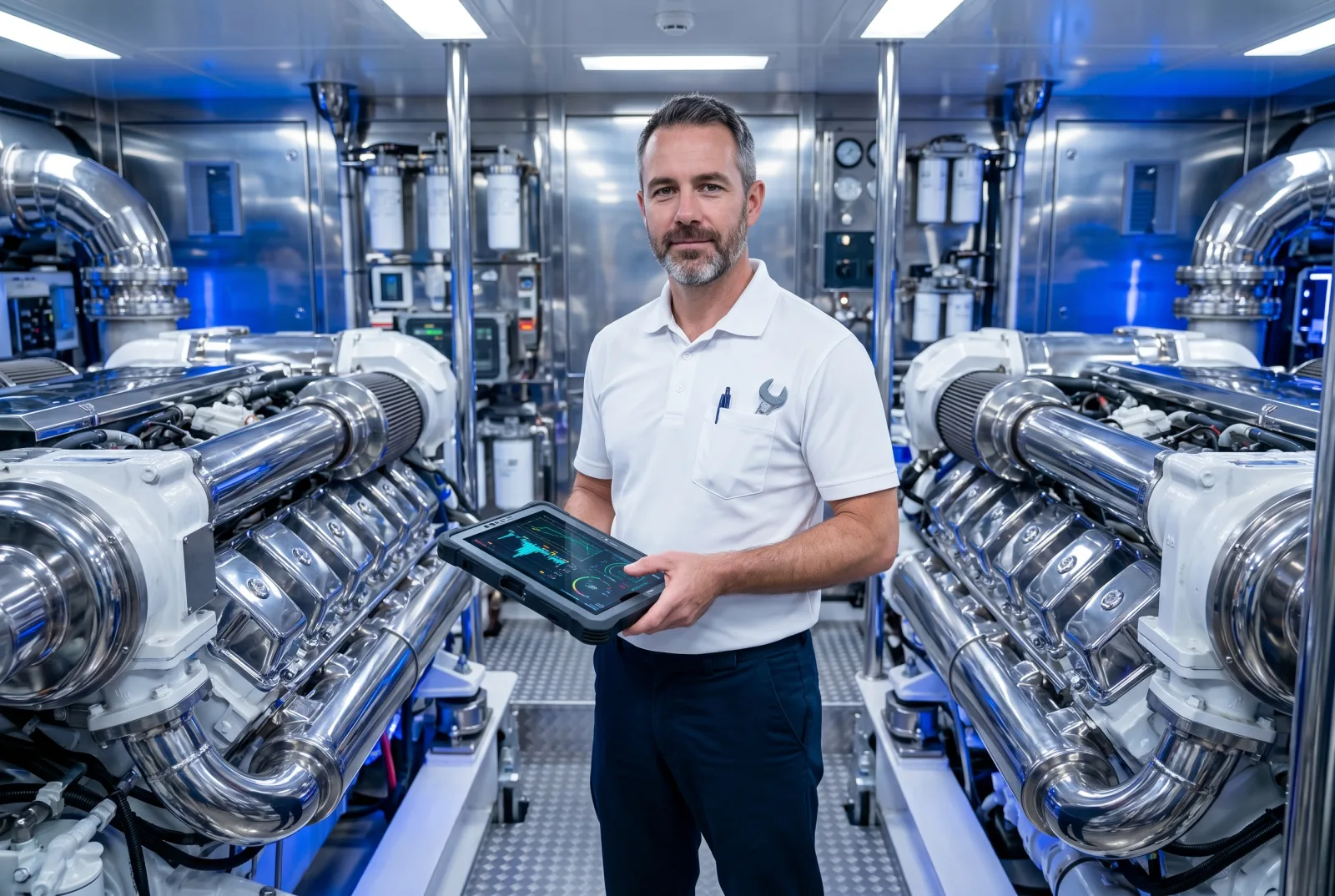
Yacht chief engineer in a pristine engine room holding a tablet showing engine telemetry in front of twin MTU diesel engines

A yacht chief engineer is technically responsible for the propulsion, electrical, mechanical, hydraulic, plumbing, and HVAC systems on board — and accountable to the captain, manager, owner, and class society for every one of them.

Technical command of the vessel

A chief engineer is the single point of accountability for everything mechanical, electrical, and hydraulic on board. Below decks, the chief's word is final.

  • Main engines + generators + propulsion auxiliaries
  • Electrical distribution + UPS + battery banks
  • HVAC + watermaker + bilge + sewage
  • Hydraulics: davits, gangways, stabilisers, thrusters
PMS — the operational backbone

A modern yacht has 10,000+ maintainable components. PMS adherence is what separates a yacht that's ready for charter from one that's ready for trouble.

  • 500h, 1000h, 2500h, annual schedules
  • OEM intervals + flag-state requirements
  • Class society survey items

The 2026 reality, by the numbers

10,000+
Maintainable components on a typical superyacht
50-100
PMS tasks per month per vessel
5-10
Open work orders at any time
400+ pages
Typical OEM manual searched repeatedly

The data the chief lives on

A chief engineer in 2026 is increasingly part-mechanic, part-data-analyst. Engine telemetry, oil analysis, vibration readings, fuel burn rates — all feed predictive maintenance decisions.

  • IoT sensor data from rotating equipment
  • Oil sample reports + trend analysis
  • Fuel burn vs RPM curves
  • Cross-fleet pattern detection

What separates the calm chiefs

High-performing chief engineers share a pattern: one platform holds the PMS, defect log, spares inventory, and OEM documentation — so a question that used to mean a paper search is answered from one place. See the full Fleet module and our predictive maintenance guide.

Typically found inside

Superyachts (24m+)Charter YachtsRefit YachtsMulti-Vessel FleetsCommissioning & Delivery
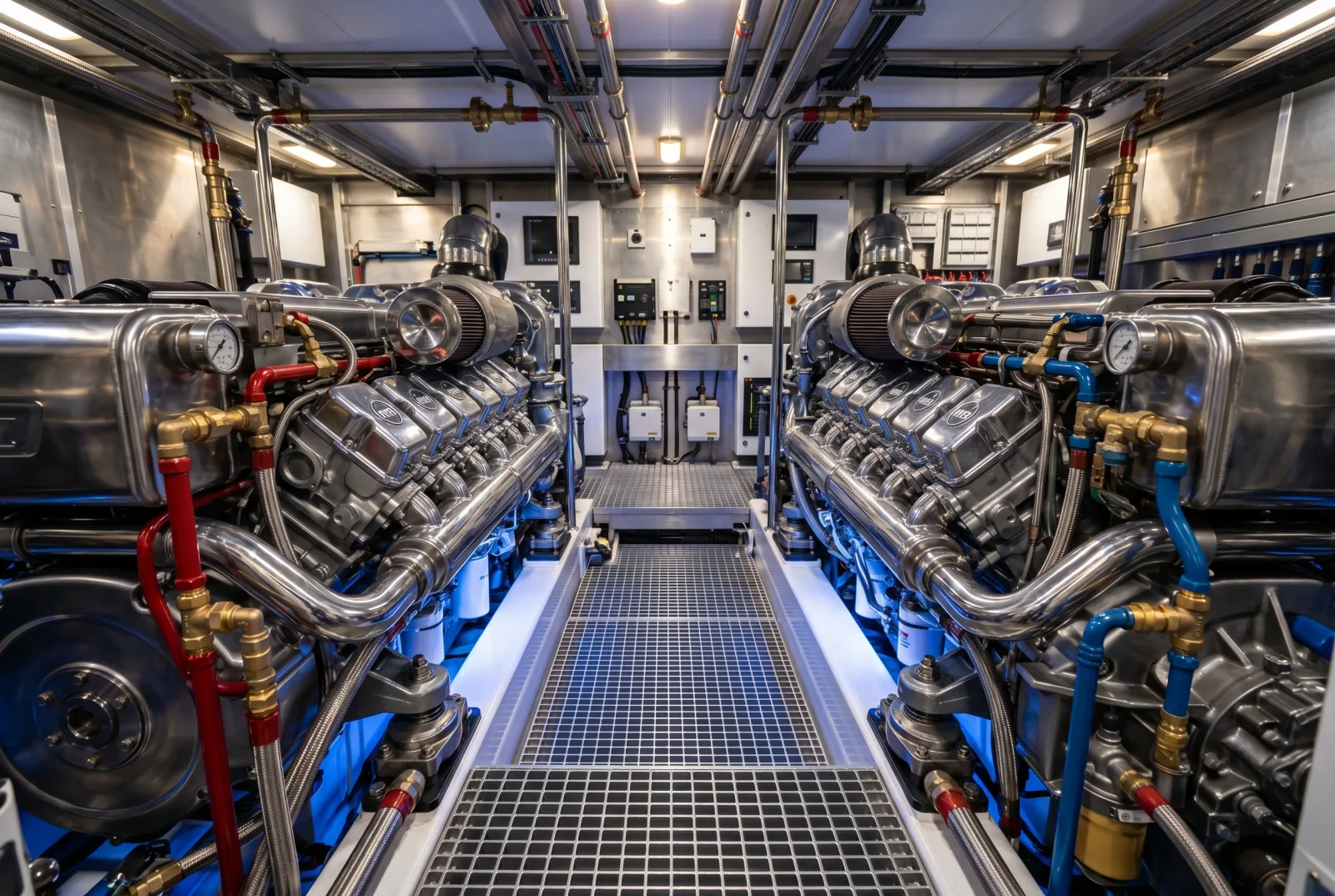
Pristine yacht engine room with twin MTU diesel engines, polished steel surfaces and blue ambient lighting
A well-run engine room is invisible. The chief engineer's job is to keep it that way — and to be ready when class society visits.
Daily reality

What this role faces every week

Recurring pain points that turn engine-room work into paperwork archaeology — almost all reducible with the right system.

OEM manual retrieval

A part fails at 23:00. The OEM manual is 400 pages, in a binder, in the technical office. The chief needs the specific procedure now.

Searchable OEM documentation is the single highest-ROI investment for a working chief.

Spares inventory mismatch

"We have the spare. Where is it?" — a question every chief has asked at 02:00.

  • Spare on board vs in storage
  • Critical spares vs nice-to-have
  • Lead times for re-order

Spares inventory linked to PMS tasks closes the loop automatically.

Defect log fragmentation

Defect log in three places: handwritten engine room whiteboard, captain's notebook, manager's email.

One defect log, written once, visible to all three — removes most of the chase.

Predictive maintenance without infrastructure

Owner wants predictive maintenance. Without IoT data capture and trend analysis, that's wishful thinking.

  • Vibration sensors on rotating equipment
  • Temperature monitoring at bearings
  • Oil condition analytics

Class society audit panic

Class survey scheduled. Two weeks of document gathering — drill logs, PMS adherence, corrective actions, NCNs.

Continuously audit-ready PMS removes the panic.

Vendor and procurement chaos

Each system has its own preferred vendor, and the chief is the one keeping the relationships warm. Centralised procurement is a fleet manager goal — but it can't work without the chief's input.

  • MTU service partner
  • Naiad service partner
  • OEM-direct for critical spares
What SupaSailing does

Built around this exact workflow

SupaSailing's technical workflows are built around how chief engineers actually work — on the bridge tablet, in the engine room, mid-watch.

Full PMS workflow

500h / 1000h / 2500h / annual schedules per equipment item, by running hours or by calendar, with the full maintenance history.

Defect log & work orders

Single defect log. Reported once, assigned to the engineer, visible to the manager. No three-place chase.

Spares inventory linked to PMS

Spares linked to the maintenance job that consumes them and deducted from stock when the job is done. Minimum quantities flag low stock.

OEM manual search

Searchable PDFs of 400-page manuals. A specific procedure in seconds, not 20 minutes of binder hunt.

Equipment risk outlook

Defect trends, overdue jobs and running-hours usage scored per equipment item — "500h service in about 12 days at current usage".

Class society audit prep

Records kept as the work happens. PMS, maintenance history and ISM exports to PDF or spreadsheet when the surveyor asks.

Suppliers & purchase orders

Supplier contacts linked to inventory items and orders. Delivered orders update stock automatically.

Engine room on Telegram

Report a defect, close a maintenance job or take a spare out of stock by text or voice note, confirmed before it is saved.

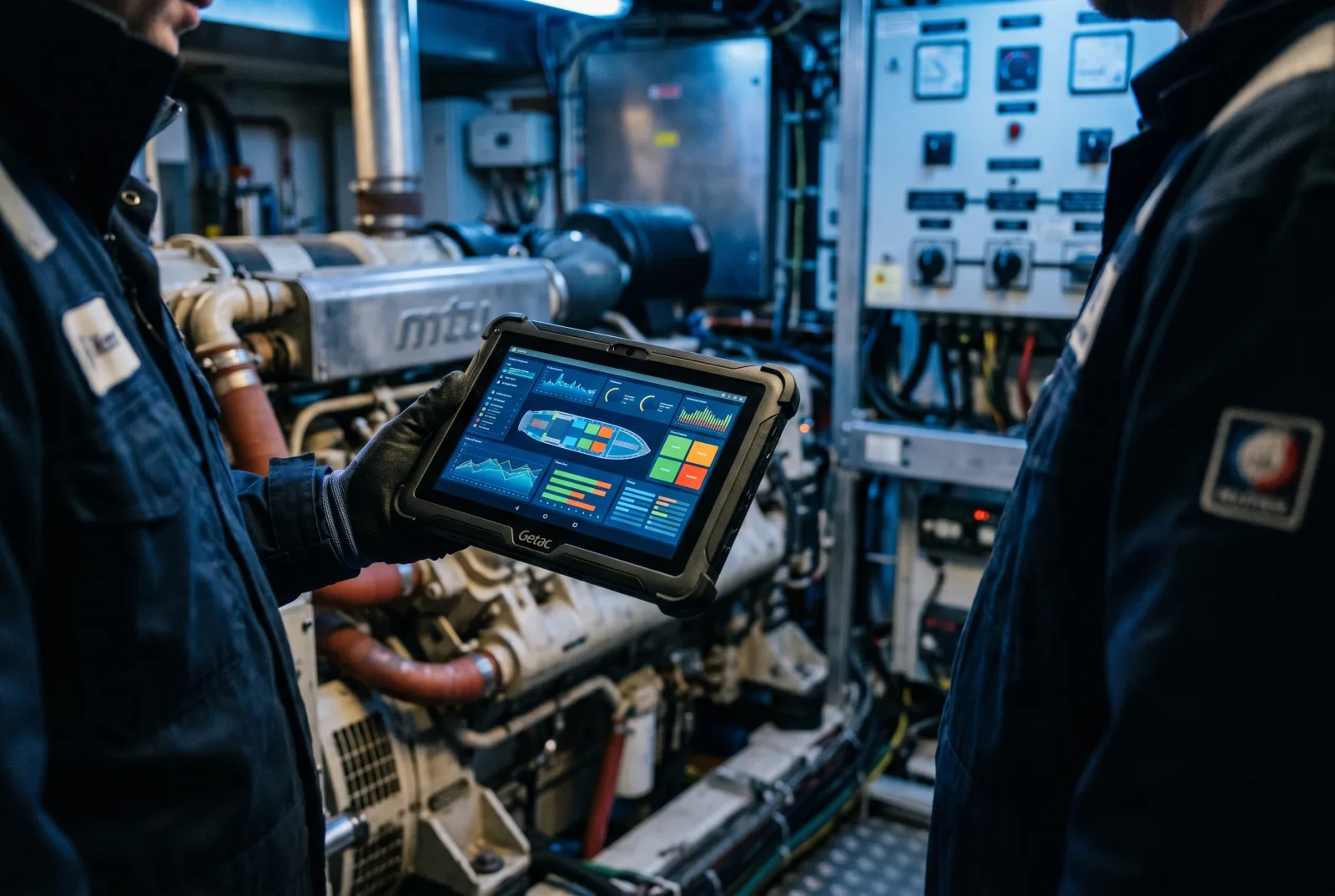
Engineer's hand holding a ruggedised tablet displaying a maintenance dashboard near a generator
The 2026 chief engineer is part-mechanic, part-data-analyst. Predictive maintenance is real, but only if the data is captured.
How it works in practice

A typical workflow with SupaSailing

A representative day for a chief engineer on a 35-metre motor yacht using SupaSailing.

  1. 1

    07:00 — Morning rounds

    Engine room walk-through, running hours updated. The risk outlook flags the starboard generator: its 500-hour service is due in about 12 days at current usage.

  2. 2

    08:00 — PMS scan

    Today's PMS tasks visible on the tablet. 500-hour service on starboard main due in 14 days — spare parts confirmed on board.

  3. 3

    10:00 — Defect from yesterday

    Captain logged a head not flushing properly. Defect assigned, spare taken out of stock.

  4. 4

    13:00 — OEM manual lookup

    Naiad stabiliser fault code. Question asked against the indexed manual, procedure found, fault cleared.

  5. 5

    15:00 — Class society item

    Quarterly fire-pump test logged. Continuously audit-ready — class survey in 6 weeks is no longer a panic.

  6. 6

    17:00 — Vendor order

    Two spares below minimum stock. Purchase order raised to the supplier; stock updates when it is delivered.

  7. 7

    19:00 — End of watch handover

    Second engineer picks up from the same lists — open jobs, recent defects, parts on order. Nothing to write up.

Operational impact

Where the difference shows up

Typical observations from chief engineers on platforms that unify PMS + defect log + spares + OEM documentation.

Ask the manual

OEM lookup time

Indexed manuals return the relevant passage instead of a 400-page binder hunt.

Reduced

Spares stockout incidents

Minimum stock levels flag low spares, and parts used on jobs come off stock.

Flagged early

Maintenance risk signals

Defect trends, overdue jobs and running-hours usage surface risk before a failure.

Records on file

Class audit prep

Work logged as it happens and exported to PDF removes the pre-survey panic.

Before / after

Manual workflow vs SupaSailing

Aspect
Manual workflow
With SupaSailing
PMS workflows
Excel sheet + paper binder
Hours and calendar schedules per item
Defect log
Whiteboard + WhatsApp + email
Single log, captain/engineer/manager visible
Spares inventory
Spreadsheet (outdated)
Linked to jobs, low-stock alerts
OEM manuals
400-page binders, 20 min lookup
Indexed manuals, ask a question
Predictive data
Not captured
Risk outlook from defects and hours
Class audit prep
2 weeks of document gathering
Continuously audit-ready
Vendor history
Email archive
Supplier contacts + order history
Frequently asked

Questions about SupaSailing for this role

See SupaSailing on your actual workflow

30-minute demo tailored to a chief engineer's real use case. If a different platform is a better fit, we'll say so.