ISM Code Compliance: How Software Simplifies Maritime Safety Management
Every year, maritime accidents cost the global shipping industry billions of dollars in losses — not counting the irreplaceable human toll. The International Safety Management (ISM) Code was established precisely to prevent these tragedies, yet compliance remains a persistent challenge for fleet operators worldwide. A 2023 Paris MOU report found that ISM-related deficiencies accounted for over 18% of all port state control detentions, making it the single largest category of regulatory failures. The question every ship manager must ask is: are your current compliance processes robust enough to protect your crew, your vessels, and your operating licenses?
Manual safety management systems — binders full of checklists, spreadsheets tracking drill schedules, email chains documenting near-misses — create an illusion of compliance. The reality is that dispersed, paper-based documentation is nearly impossible to audit, easy to falsify unintentionally, and prone to version-control failures. When Port State Control inspectors arrive, the difference between a detention and a clear certificate often comes down to whether your documentation tells a coherent, verifiable story.
This guide explores how modern maritime safety management software transforms ISM code compliance from a bureaucratic burden into a genuine operational advantage — and why forward-thinking operators are making the switch.

What the ISM Code Actually Requires
The ISM Code, formally known as the International Management Code for the Safe Operation of Ships and for Pollution Prevention, entered into force in 1998 under SOLAS Chapter IX. It mandates that shipping companies establish a Safety Management System (SMS) covering every aspect of vessel operations, from routine maintenance to emergency response.
At its core, the ISM Code requires:
- A documented safety and environmental protection policy — a formal statement of company values and commitments
- Instructions and procedures for safe ship operation and protection of the environment
- Defined levels of authority and lines of communication between shore and shipboard personnel
- Procedures for reporting accidents and non-conformities
- Procedures to prepare for and respond to emergency situations
- Internal audit programs and regular management reviews
The code applies to all passenger vessels, all cargo vessels of 500 GT or more, and mobile offshore drilling units. Compliance is verified through the Document of Compliance (DOC) issued to the company and the Safety Management Certificate (SMC) issued to each vessel.
What makes ISM particularly demanding is its emphasis on continuous improvement. It is not enough to document procedures once and file them away — the system must demonstrate that non-conformities are identified, investigated, corrective actions are taken, and lessons are shared across the fleet.
The Challenges of Manual ISM Compliance
Most ship operators understand the theoretical requirements of the ISM Code. The gap lies in execution, particularly when relying on manual or paper-based processes.
Document Version Control Failures
A Safety Management System can contain hundreds of documents: standing orders, bridge procedures, engine room procedures, cargo handling instructions, emergency plans, maintenance manuals, and more. Each document must be at the correct revision level on every vessel. Manual distribution through email, USB drives, or physical mail creates almost inevitable version-control failures. During a PSC inspection, having an outdated procedure on the bridge is treated as a non-conformity — even if the correct version exists in the superintendent's office ashore.
Drill Management Gaps
ISM requires regular drills covering fire, abandon ship, man overboard, and other emergency scenarios. Records must document who participated, what equipment was used, and what deficiencies were identified. Manual drill tracking — often logged in a paper muster book — makes it difficult to verify compliance across a large fleet, identify vessels that are falling behind on required exercises, or demonstrate improvement trends to auditors.
Non-Conformity and Incident Reporting Barriers
The ISM Code explicitly requires a "blame-free" culture where crew members report near-misses and non-conformities without fear of punishment. In practice, if reporting requires filling out complex paper forms and submitting them through hierarchical channels, reporting rates drop dramatically. When non-conformities go unreported, root causes fester until they produce serious accidents.
Audit Preparation Chaos
Preparing for a Document of Compliance or Safety Management Certificate audit typically means weeks of intensive document gathering. Superintendents scramble to compile evidence of drill completions, maintenance records, non-conformity closures, and management reviews. This reactive approach is both inefficient and risky — it makes it easy to miss gaps that a fresh pair of auditor eyes will quickly spot.
How Maritime Safety Management Software Solves These Problems
Purpose-built ISM compliance software addresses each of these pain points systematically, turning compliance from a reactive scramble into a continuous, automated process.
Centralized Document Control
Digital document management systems maintain a single master copy of every SMS document, with full version history and automated distribution to vessels. When a procedure is updated, the system:
- Distributes the new version to all applicable vessels simultaneously
- Requires acknowledgment from designated officers before the update takes effect operationally
- Maintains a complete audit trail showing who received, reviewed, and acknowledged each version
- Automatically archives previous versions with timestamps for audit purposes
This eliminates the version-control problem entirely and reduces the administrative burden on safety officers and superintendents significantly.
Automated Drill Scheduling and Tracking
Safety management platforms integrate drill management modules that track required drill frequencies against actual completions in real time. Fleet managers see at a glance which vessels are current, which are approaching due dates, and which are overdue. Automatic reminders are sent to masters before drill deadlines. After each drill, officers complete structured digital reports that capture attendance, equipment condition notes, and identified deficiencies — automatically routed to the relevant shore-side superintendents for review.
Digital Non-Conformity and Near-Miss Reporting
Mobile-accessible reporting forms dramatically lower the barrier to reporting. A crew member who spots a potential hazard can submit a report from their phone in under two minutes. The system routes the report automatically: non-conformities go to the master for immediate review, near-misses are flagged for safety officers, and high-severity incidents trigger immediate notifications to company management.
Critically, all reports feed into a fleet-wide analytics dashboard. Safety managers can identify patterns — recurring equipment failures on specific vessel types, high incident rates during particular operations, or shore teams that are slow to close corrective actions. This data-driven approach is exactly what ISM's continuous improvement mandate envisions.
Emergency Procedure Management
Emergency response plans must be accessible instantly under stress. Digital safety management systems store all emergency procedures in a structured, searchable format available on vessel workstations and tablets. Muster lists are maintained digitally and always reflect current crew assignments. When crew changes occur, the system automatically updates emergency assignments without requiring manual re-drafting of paper muster cards.
ISM Code Compliance and Planned Maintenance Integration
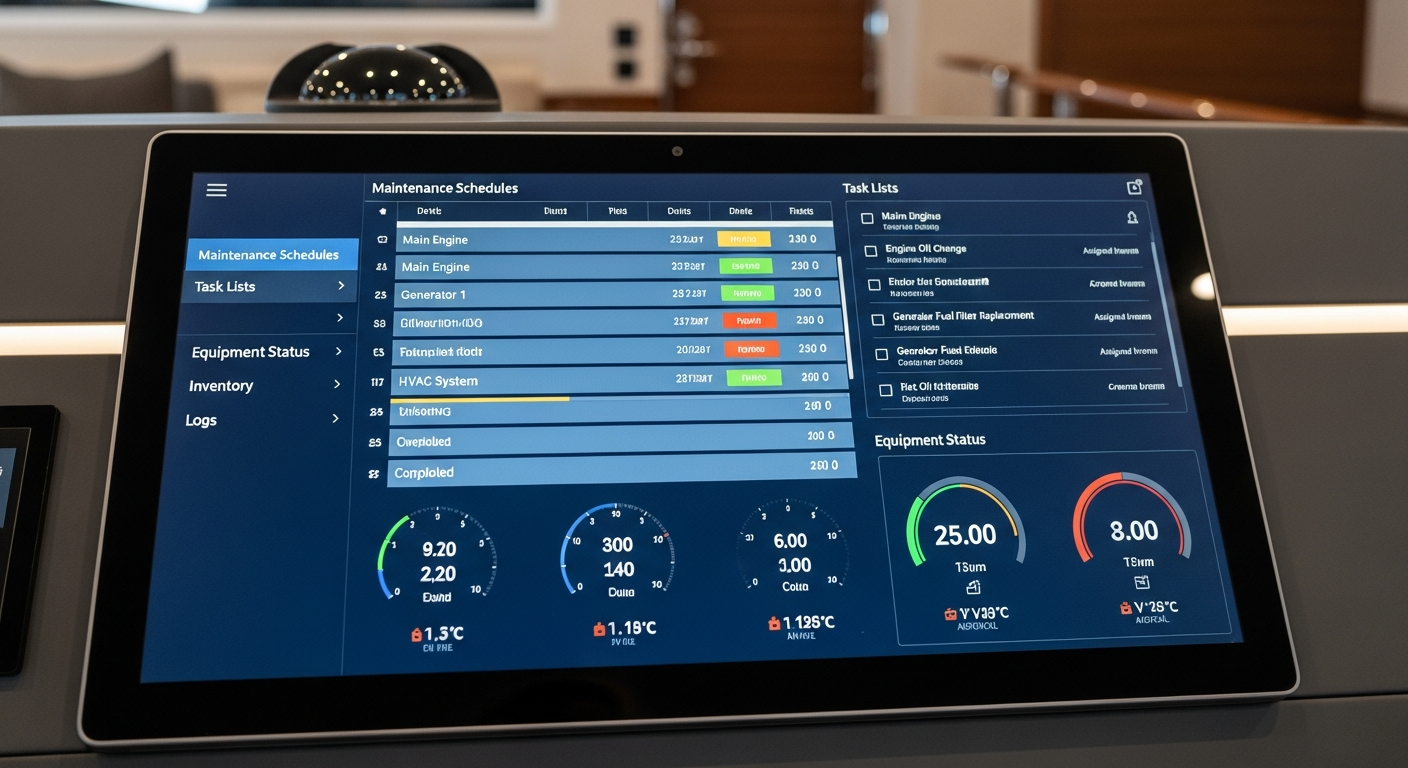
One of the most powerful features of integrated maritime management platforms is the connection between the SMS and the Planned Maintenance System (PMS). Many equipment-related non-conformities have their root cause in missed maintenance — a relief valve not tested on schedule, a fire pump not serviced at the required interval. When compliance software integrates ISM documentation with PMS records, operators gain:
- Cross-reference capability — linking non-conformities directly to the maintenance tasks that should have prevented them
- Predictive risk scoring — identifying vessels with high overdue maintenance as elevated safety risks
- Comprehensive audit evidence — demonstrating to auditors that maintenance and safety processes are genuinely integrated, not siloed
This integration is a key differentiator between purpose-built maritime platforms and generic safety management tools that lack understanding of vessel operations. Modern fleet management solutions like SupaSailing's fleet management platform offer precisely this kind of deep integration between compliance, maintenance, and operational modules.
Preparing for ISM Audits with Software Support
With the right software in place, audit preparation transforms from a multi-week scramble to a one-day exercise. Because all compliance evidence is captured continuously and stored in structured, searchable databases, generating audit packages becomes a matter of applying date filters and exporting reports.
Typical audit-ready reports generated automatically by compliance software include:
- Drill completion records by vessel and drill type for any specified period
- Non-conformity registers with root cause analysis and corrective action closure dates
- Document version control logs showing distribution and acknowledgment records
- Management review minutes with action item closure tracking
- Master's review reports and shipboard safety meeting records
Companies that have implemented digital ISM compliance systems consistently report shorter audit preparation times and significantly fewer findings during external audits. When every process leaves a digital audit trail, the documentation tells its own story.
Benefits and ROI of Digital ISM Compliance
The business case for maritime safety management software is compelling across multiple dimensions:
- Reduced PSC detention risk: Companies report 30-50% reductions in ISM-related deficiency findings after implementing digital SMS platforms
- Lower insurance premiums: P&I clubs and hull underwriters increasingly offer premium discounts for operators with demonstrable digital SMS programs
- Reduced incident costs: Organizations using digital safety management systems report 20-35% reductions in recorded safety incidents within 12-18 months of deployment
- Administrative efficiency: Safety officers report saving 8-12 hours per week on documentation tasks when moving from paper to digital systems
- Audit cost reduction: External ISM audits typically require 40-60% less preparation time with digital compliance systems in place
- Crew retention: Well-documented safety cultures with easy reporting mechanisms contribute to improved seafarer satisfaction and retention
For a fleet of 10 vessels, the combined savings from reduced incidents, lower insurance costs, and administrative efficiency typically deliver ROI within 6-12 months of implementation.
Frequently Asked Questions About ISM Code Compliance Software
What is the ISM Code and who does it apply to?
The ISM Code (International Management Code for the Safe Operation of Ships and for Pollution Prevention) is a mandatory international standard under SOLAS Chapter IX. It applies to all passenger vessels, cargo vessels of 500 GT and above, and mobile offshore drilling units operating in international waters. It requires companies to establish and maintain a documented Safety Management System (SMS).
Can software replace the need for an ISM manual?
No — ISM Code requires a documented Safety Management System that can exist in digital or physical form. What software does is manage, control, and evidence compliance with that SMS far more effectively than paper. The manual's content must still meet ISM requirements; digital platforms handle the administration, distribution, acknowledgment tracking, and audit evidence generation that surrounds that content.
How long does ISM compliance software implementation take?
Implementation timelines vary based on fleet size and existing documentation maturity. For a fleet of 5-20 vessels, most operators complete the core implementation — document migration, crew training, and initial drill data entry — within 8-16 weeks. The system begins delivering compliance value immediately, with full ROI typically realized within 6-12 months.
Conclusion
ISM Code compliance is not optional — it is the foundation of safe, sustainable maritime operations. But the methods used to achieve that compliance have evolved dramatically. Paper-based systems that once seemed adequate now create unacceptable risks: documentation gaps that invite PSC detentions, reporting barriers that allow hazards to escalate, and audit preparation processes that consume thousands of person-hours annually.
Digital maritime safety management platforms transform compliance from a reactive chore into a continuous, data-driven process that genuinely improves safety outcomes. For fleet operators ready to move beyond spreadsheets and binders, SupaSailing's integrated fleet management solution provides the ISM compliance tools, maintenance integration, and audit-ready documentation your operation needs — built specifically for the realities of modern maritime management.
See SupaSailing in action
Book a free demo call and discover how one platform can run your charter, marina, fleet, shipyard or brokerage.
Book a Free DemoShare this article