SupaSailing

Fleet Manager

One platform to keep a multi-vessel fleet on time, on budget, on certification — without the spreadsheet patchwork.

One screen
Fleet view
Per-vessel
PMS workflows
Automated
Cert tracking
Self-service
Owner reports
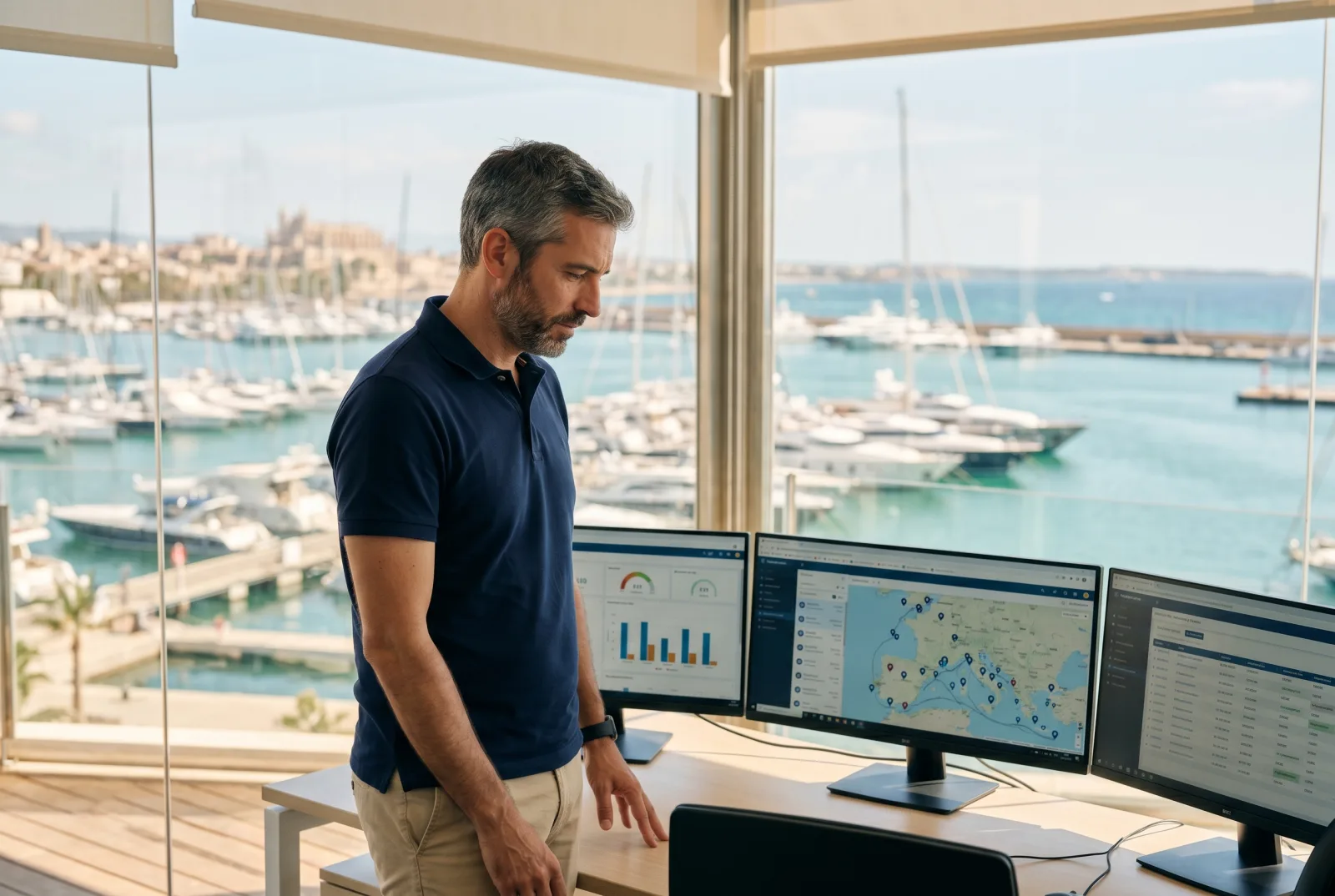
Fleet manager reviewing yacht fleet status on three monitors in a Mediterranean office with a marina visible through the window

A fleet manager runs operations across multiple vessels under a management company, family office, or owner-operator group — coordinating crew, maintenance, compliance, finance and owner reporting from a single point of accountability.

The single point of accountability

A fleet manager is the person an owner calls when anything goes wrong on any vessel. The role connects captain, chief engineer, broker, central agent, accountant, and the owner into one operational pipeline.

  • Captains report status, blockers, and exceptions
  • Chief engineers escalate technical needs
  • Owners expect monthly financial transparency
  • External vendors expect coordinated procurement

Coordinating across vessels and disciplines

The hard part is not running one vessel well — it is keeping all of them coherently aligned on quality, compliance, and cost.

  • PMS schedules synced with charter windows
  • Crew rotation aligned to yard periods
  • Procurement leverage across multiple vessels
  • Owner reporting in one consistent format

The 2026 reality, by the numbers

5-50
Vessels per fleet manager (typical range)
8-12
Disconnected tools per fleet (typical)
24/7
Coverage expected when a vessel is under way
Monthly
Owner financial cadence — moving to real-time

Why the role is harder in 2026

Owner expectations have moved to real-time visibility. The era of monthly PDF reports as the primary touchpoint is over — and crews rotate faster than ever, leaving institutional knowledge under threat.

  • Real-time owner portals are now table stakes
  • Crew tenure shortening — onboarding cost rising
  • Compliance regimes (ISM, MLC, cybersecurity) expanding
  • Operational data spread across 8-12 tools per fleet

What separates the best fleet managers

High-performing fleet managers share a pattern: one shared system of record across all vessels, with captains, engineers and accountants writing into the same database — not stitching reports together at month-end. See the full Fleet module for the operational scope.

Typically found inside

Yacht Management CompaniesFamily OfficesOwner Holding CompaniesMulti-Vessel Charter OperatorsCrewing & Operations Firms
Aerial view of three luxury yachts in different cruising positions across the Mediterranean
A fleet manager is rarely looking at one vessel — the job is holding a coherent operational picture across many at once.
Daily reality

What this role faces every week

The same fleet pain points repeat across management companies — and they compound: a small slip in one vessel today becomes an owner conversation tomorrow.

No real-time fleet visibility

A fleet manager needs to know where every vessel is and what state it is in — without phoning each captain.

  • Position + bunkered fuel + crew aboard
  • Open work orders + critical defects
  • Charter status + APA balance

Without a fleet dashboard, the answer always lives in someone else's head or inbox.

Maintenance scheduling collisions

Each vessel's PMS schedule meets the charter calendar and the yard slot — and the three rarely line up by accident.

  • 500-hour service due in peak charter month
  • Class survey window vs owner cruising window
  • Spare parts lead times missing the yard slot

A coordinated maintenance calendar across the whole fleet saves more days than any other intervention.

Crew certification chaos

Every officer has 15+ certifications, each expiring on a different date, across multiple flag states.

  • STCW, ENG-1, GMDSS, ECDIS, etc.
  • Vessel-specific endorsements
  • Flag-state-specific revalidations

Miss an expiry → vessel cannot legally sail. Automated expiry tracking is the lowest-friction win.

Owner financial reporting

Owners now expect monthly variance reports, not annual surprises. Multi-vessel reporting in Excel breaks within a year.

  • Budget vs actual per vessel
  • Crew payroll + benefits across rotations
  • APA + charter revenue reconciliation
  • Operating cost benchmark across the fleet

Owners stay calm when they can self-serve the answer instead of asking.

ISM and compliance burden

ISM compliance is per-vessel, but the fleet manager is the audit accountability point when class society arrives.

  • Drill logs + emergency response procedures
  • Document control + version management
  • Cybersecurity (IMO MSC.428(98)) on every vessel
  • Non-conformance reports + corrective actions

Aligned compliance workflows across the fleet are cheaper to maintain than per-vessel chaos.

Disconnected vendor coordination

Every vessel uses different vendors. The fleet manager loses procurement leverage and standardisation when each captain orders independently.

  • Provisioning across multiple home ports
  • Spares logistics across mid-charter destinations
  • Insurance, classification, fuel — all per-vessel today

Centralised vendor management compounds savings every charter season.

What SupaSailing does

Built around this exact workflow

SupaSailing's fleet module gives the fleet manager a single coherent view of every vessel, with the supporting workflows (PMS, crew, finance, compliance) running on the same database as the captains and engineers themselves.

Fleet dashboard

Every vessel's health, sorted by what needs attention first, on one screen.

  • Overdue maintenance
  • Expired or expiring certificates and documents
  • Insurance renewals

Planned maintenance system

PMS per vessel, with overdue maintenance flagged fleet-wide and jobs on the same calendar as trips.

Crew certification & roster

Every certificate auto-monitored with expiry alerts. Duty roster and hours of rest on the same crew record.

  • STCW, ENG-1, GMDSS, vessel-specific

ISM compliance helpers

Drill scheduling, non-conformities with corrective actions, and PDF exports ready for the LR, BV, DNV, ABS or RINA auditor.

Owner view & financial reporting

Read-only owner view — vessel health, this month's spending against budget, recent trips and defects, plus an optional weekly digest email.

Suppliers & purchase orders

Shared supplier contacts, purchase orders per vessel and a fleet inventory view. Delivered orders update stock automatically.

Trips & maintenance on one calendar

Trips, maintenance, ISM tasks, crew leave and certificate expiries on one calendar per vessel, and every vessel's trips in the fleet calendar.

Budget vs actual per vessel

Budget planned by category and month, compared with actual spending, plus a fleet view of open and overdue payables.

Crew rotation handover at a Mediterranean marina dock
Rotations, refits, certifications, owner reports — the calendar never stops. A fleet manager who runs that on spreadsheets eventually runs out of memory.
How it works in practice

A typical workflow with SupaSailing

A typical week for a fleet manager running 8 vessels on SupaSailing — 7 representative touchpoints.

  1. 1

    Monday morning fleet brief

    Single dashboard scan: overdue maintenance, certificates and documents expiring, upcoming trips across the fleet.

  2. 2

    Captain check-in calls

    Captains and crew have already logged defects, hours and maintenance in the app or on Telegram. Calls are short, exception-based.

  3. 3

    Owner reporting prep

    Owners already see their read-only view and weekly digest. Finance reports export to PDF; the fleet manager reviews the narrative, not data entry.

  4. 4

    Cross-fleet procurement

    Purchase orders raised per vessel from shared supplier contacts. Delivered orders update stock without re-keying.

  5. 5

    Yard period planning

    Next yard window planned on the calendar next to trips, maintenance and certificate expiries. Fewer surprises at the yard.

  6. 6

    Crew rotation alignment

    Officer rotations checked against the duty roster, leave requests and certificate validity. Gaps visible before the vessel sails.

  7. 7

    Compliance audit prep

    Class society audit due Q3. ISM records, drill logs and corrective actions export to PDF in one click.

Operational impact

Where the difference shows up

What multi-vessel management companies typically notice after moving from spreadsheet-plus-email to one shared fleet platform.

As it is logged

Fleet status capture time

Captains write into the same record the fleet manager reads from. No chase calls.

Higher

PMS adherence

Overdue maintenance is flagged per vessel on the fleet dashboard, before it turns into a surprise.

Flagged early

Certification expiries

Automatic reminders from 90 days out close the most common cause of vessel detention.

Self-service

Owner reporting

The owner view and weekly digest cut ad-hoc requests between monthly reports.

Before / after

Manual workflow vs SupaSailing

Aspect
Manual workflow
With SupaSailing
Fleet status visibility
Captain calls + Excel + WhatsApp
Fleet dashboard, written by the people on board
PMS scheduling
Per-vessel spreadsheet, manual reconciliation
PMS per vessel, overdue flagged fleet-wide
Crew certifications
Scanned PDFs in a SharePoint folder
Database with expiry tracking + alerts
Owner reporting
Monthly PDF, owner asks follow-ups by email
Read-only owner view + weekly digest
Procurement
Each captain orders independently
Shared suppliers, purchase orders per vessel
ISM audit prep
Documents collected over 2 weeks before audit
Continuously audit-ready
Cost benchmarking
Year-end Excel export
Budget vs actual per vessel, any time
Frequently asked

Questions about SupaSailing for this role

See SupaSailing on your actual workflow

30-minute demo tailored to a fleet manager's real use case. If a different platform is a better fit, we'll say so.