Boat Antifouling: When to Do It, Which Type to Choose and What It Costs
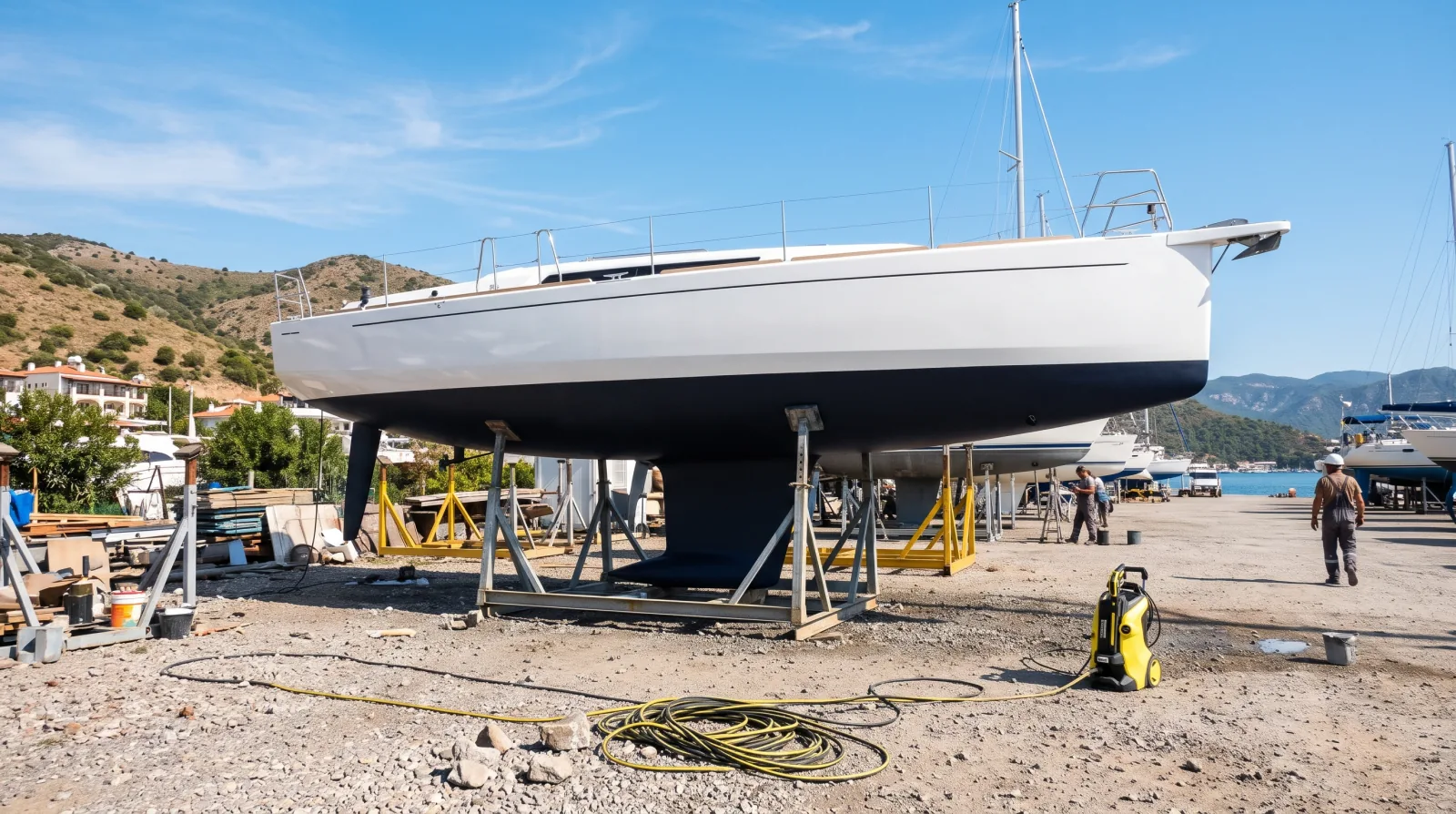
After a few weeks in the water, a hull starts to cover itself in algae, then in weed and barnacles. That is why boat antifouling is one of the most recurring maintenance items, and one of the most debated: which product to choose, how often to redo it, whether to do it yourself or at a boatyard, and how much it costs.
This guide explains what marine growth does to a boat, what the types of antifouling are and how to choose, when to apply it and how to work step by step. You will also find the cost items, with indicative orders of magnitude, and the mistakes that lead to redoing the job after a single season.
The key point: there is no best antifouling paint in absolute terms. The right product depends on how, where and how much you use the boat, on the hull material and on what is already underneath. Surface preparation matters as much as the paint.
What Does Marine Growth Do to Your Boat?
Marine growth, known as fouling, is not only a cosmetic problem. Every layer of algae and organisms increases the roughness of the hull and worsens its behaviour in the water. The most common effects show up early:
- Loss of speed: with the same engine or wind the boat goes slower and sailing performance gets worse.
- Higher consumption: to hold the same pace the engine has to work harder and burns more fuel.
- Blocked seacocks: reduced cooling can lead to the engine overheating.
- Weighed-down propeller and shaft, with vibration and lower efficiency.
- More work at every haul-out: encrusting organisms have to be removed with scrapers and a pressure washer.
Antifouling is a paint for the underwater hull, the part of the hull that is immersed, that counters this growth. It usually does so by slowly releasing active substances, or by creating a surface to which organisms struggle to attach.
What Are the Types of Antifouling?
Products fall into families according to how they work and how they wear away over time. Trade names change, but the categories are these.
Hard or hard-matrix antifouling
The layer stays on the hull and releases the active substance without wearing away significantly. It suits fast boats and those who sail often, because it can be cleaned with a brush without damaging it. Over the years layers build up and sanding is needed to remove them.
Self-polishing or eroding antifouling
The layer wears away gradually with the movement of the water, releasing the active substance and avoiding the build-up of old coats. It works well if the boat sails regularly: if it sits idle, erosion is minimal and protection drops.
Hybrid antifouling
It combines features of the two previous families, with slower, controlled wear. It is a frequent choice for those looking for a compromise between durability, ease of maintenance and performance.
Silicone or foul-release antifouling
It does not release biocidal substances: it creates a smooth, slippery surface to which organisms attach poorly and detach more easily with speed or light cleaning. It is gentler on the environment, but requires careful preparation, costs more and the surface is delicate. It works best on boats that move often.
Products for outdrives, propellers and metal parts
Outdrives, propellers and shafts have particular needs. There are specific products, often copper-free, because some substances can trigger galvanic corrosion on aluminium and delicate alloys. Always check the technical data sheet and the instructions of the propeller or drive manufacturer.
| Type | How it works | Suited to | Keep in mind |
|---|---|---|---|
| Hard (hard matrix) | Releases the active substance without wearing away much | Fast boats, frequent use | Builds up layers over time, sometimes to be removed |
| Self-polishing (eroding) | Wears away slowly with the water | Boats that sail regularly | Protects less if the boat sits idle |
| Hybrid | Combines the two mechanisms | Compromise between durability and maintenance | Check compatibility with the previous coat |
| Silicone (foul-release) | Slippery surface, no biocides | Boats that move often | Higher cost, delicate application and surface |
| For outdrives and propellers | Specific product for metals | Outdrives, propellers, shafts | Often copper-free, check the data sheet |
How Do You Choose the Right Antifouling?
The choice is made by crossing a few facts about the boat and how it is used. Before buying it pays to answer these questions:
- Where you sail: warm, nutrient-rich waters favour growth and call for stronger protection than cold or low-productivity seas.
- How much you sail: a boat that stays in port for months has different needs from one that covers many miles.
- At what speed: fast and planing boats cope better with hard or silicone products.
- What the hull is made of: aluminium and some alloys require copper-free products, and some surfaces need a specific primer.
- What is already on the hull: not all products are compatible with the previous coat. If you do not know what is underneath, ask the boatyard or test a small area.
- Who applies it: some products, such as silicones, are more demanding at the application stage.
When in doubt, ask a boatyard or an owner with a similar boat in the same port: they know the local water and which products really work there.
How Often Should Antifouling Be Done?
In most cases antifouling is renewed every season or every two seasons, and the right time is the late-autumn or winter haul-out, when the boat is on land anyway. The factors that move the interval are:
- The product, because each data sheet states a thickness and a lifespan.
- The water temperature, which speeds up growth in summer and in warm seas.
- Use, since a boat sitting in port gets dirty sooner than one that sails.
- The condition of the hull, that is, whether there are flaking or already worn areas.
A good sign is the state of the boat at haul-out: if the hull is almost clean, the coat was still active. If it is full of encrustation, the protection had probably run out long before. The timing of haul-out ties in with storage, which we explain in our guide to boat storage and winter haul-out.
How Do You Apply Antifouling Step by Step?
The sequence is the same whether you work yourself or follow the boatyard. The order of the stages matters: skipping one is the most frequent cause of flaking.
- Haul-out and washing: as soon as the boat comes out of the water, wash with a pressure washer to remove the encrustation before it dries.
- Hull inspection: look for blisters, cracks, bare areas, osmosis, and damage to rudder, fin and propeller.
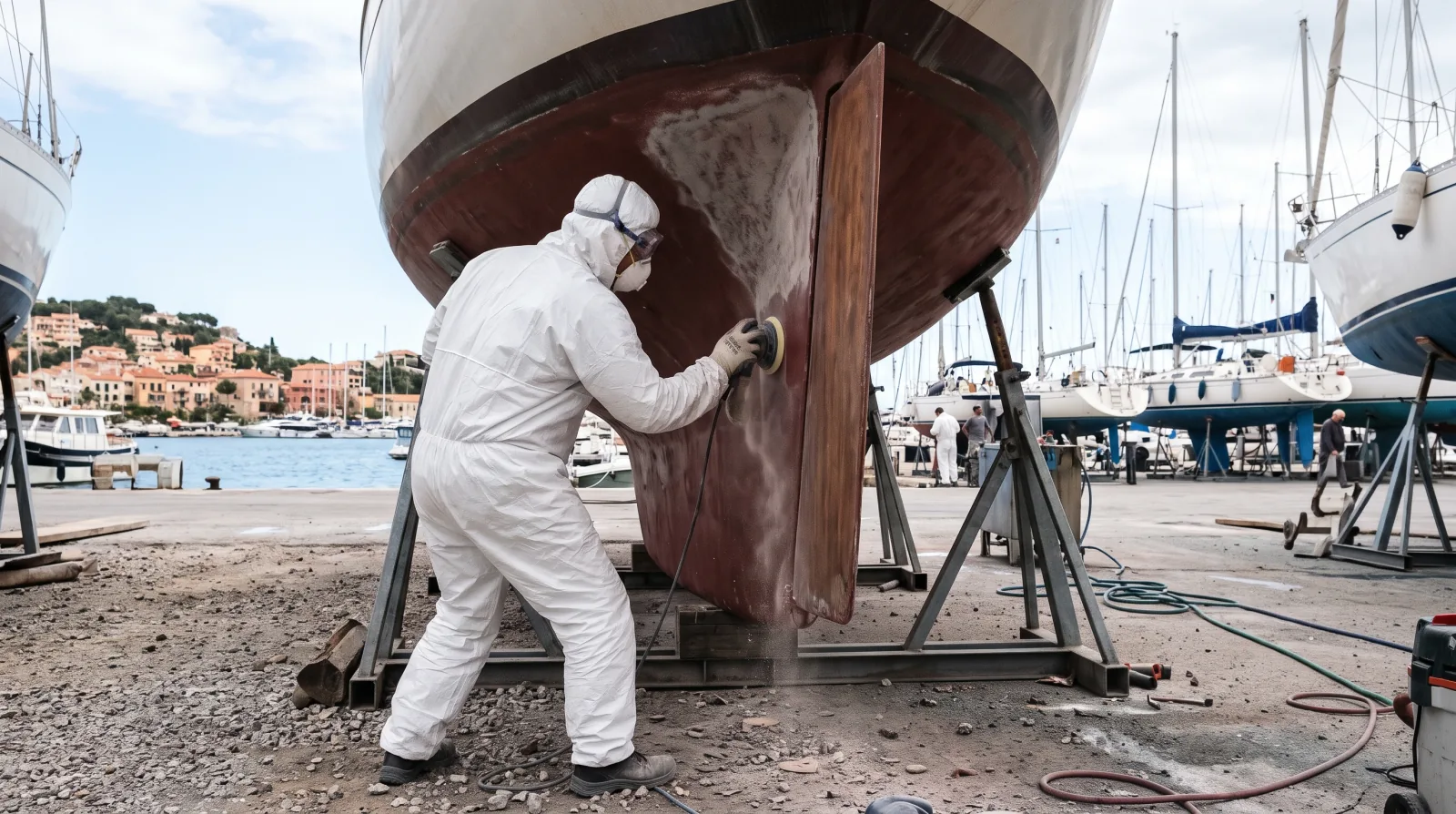
- Sanding: the surface is prepared according to the product. If the old coat is in good condition a light sanding is enough, otherwise it is removed.
- Cleaning and degreasing: remove dust and residues with a solvent recommended by the manufacturer.
- Primer or undercoat: use the primer specified in the data sheet, especially if you have exposed the gelcoat, metal or an incompatible base.
- Coats of antifouling: apply the number of coats and thickness indicated. Some manufacturers offer different colours for the coats, so you can tell when the protection is running out.
- Critical areas: give an extra coat where wear is greatest, such as the waterline, leading edges and near the through-hulls.
- Drying times and launch: respect the minimum and maximum times between the last coat and launch, because some products must be immersed within a certain period.
Work with a suitable mask, gloves and overalls, in a well-ventilated area and with the protections provided by the boatyard. Many antifoulings contain irritant substances: read the safety data sheet and do not disperse dust and residues into the environment.
What About the Propeller, Shaft and Anodes?
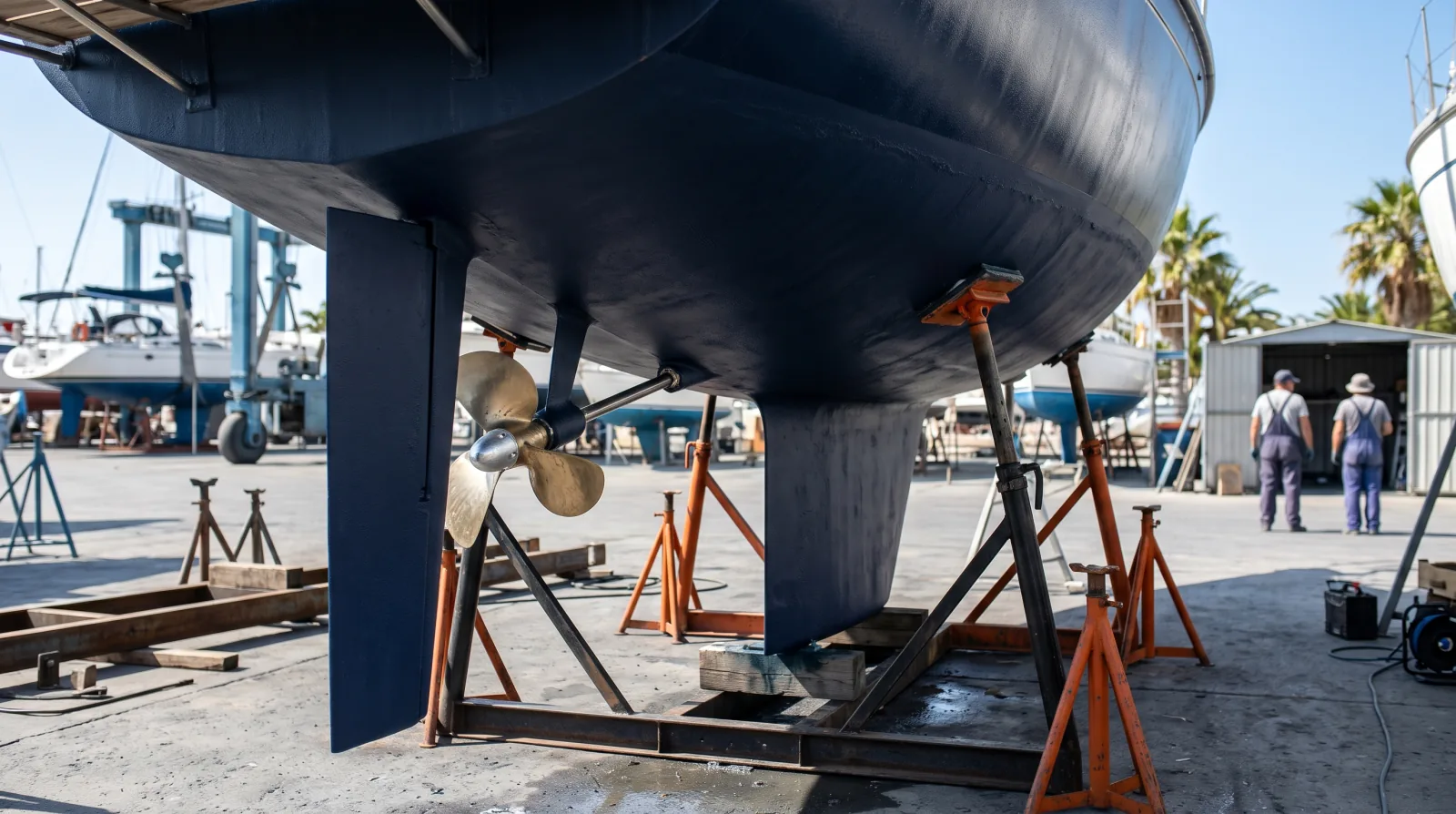
While the boat is on land, the propeller, shaft and anodes need particular attention. These are the parts where corrosion and encrustation cause the most trouble, and where a check costs very little.
- Sacrificial anodes: check their condition and replace them when they are significantly worn. They must not be painted.
- Propeller and shaft: clean, check blades, play and seals, and apply a specific product, if specified.
- Seacocks and through-hulls: check they are clear and do not paint where the builder advises against it.
- Rudder and seals: check play and the condition of the gaskets.
- Transducers and sensors: often they must not be painted with ordinary products. Follow the manufacturer's instructions.
A useful observation: if the anodes wear away very quickly, there is an electrical or leakage problem to be found. Replacing them is not enough: have the system checked.
Are There Environmental Rules on Antifouling?
Yes. Many antifoulings contain biocides which, by definition, are substances active against marine organisms. That is why their use is regulated. At international level the AFS Convention banned organotin compounds such as TBT, and in the European Union biocidal products are subject to an authorisation procedure.
For the owner this means three practical things:
- Use only authorised products for your country and your type of vessel.
- Follow the boatyard's rules: washing, water collection and disposal of residues are often mandatory.
- Find out about local rules, because some areas or ports restrict in-water hull cleaning and the use of certain products.
Rules change over time and from area to area: for details, ask the boatyard, the port authority or the product manufacturer.
How Much Does Boat Antifouling Cost?
The cost depends on the size of the hull, the product, the preparation required and who does the work. The figures that follow are indicative orders of magnitude: to decide you need written quotes and data sheets.
What pushes the price up
- Area of the underwater hull: it depends on length, beam and type of hull, not only on length overall.
- Product chosen: silicones and technical products cost more than traditional antifoulings.
- Condition of the hull: removing old layers or repairing osmosis and damage greatly increases the work.
- Number of coats, primer and consumables.
- Haul-out, storage and launch: often the heaviest part of the invoice.
- Labour: hourly rates and working times vary from area to area.
Do it yourself or use a boatyard?
As a general rule, for a medium-sized boat the materials alone, with antifouling, primer and consumables, can cost from a few hundred euros, and rise for technical products and larger boats. Work at a boatyard adds labour, haul-out, storage and launch, and the total can become several multiples of the materials alone.
| Item | Do it yourself | At a boatyard |
|---|---|---|
| Materials | You buy and measure them yourself | Included in the quote, with a margin |
| Labour | Your own time | Main cost item |
| Equipment and safety | At your expense | Provided |
| Haul-out, storage and launch | Always paid for | Always paid for |
| Warranty on the work | None | Depends on the boatyard |
| Disposal of residues | Boatyard and local rules | Handled by the boatyard |
Many boatyards do not allow you to work on your own or impose rules and fees for doing so: check before choosing. To place this expense in the annual budget, read our guide to yacht maintenance costs.
What Are the Most Common Mistakes?
Almost all antifouling problems come from a few recurring causes:
- Hasty preparation: a dirty, unsanded or still-damp surface reduces adhesion.
- A product incompatible with the previous coat, causing flaking or blisters.
- Insufficient thickness: too little product means less durability, and saving on coats is a false economy.
- Times not respected between coats or before launch.
- Wrong product for the use: a self-polishing one on a boat that never sails, for example.
- Copper-based products on aluminium, with the risk of corrosion.
- Painting anodes, transducers or parts that must not be treated.
- No record keeping: a year later nobody remembers which product was applied, how many coats and when.
The last point is the most neglected and the easiest to fix: note the product, batch, coats and date. Next season you already know whether you can top up or have to start from scratch.
How Software Simplifies Managing Antifouling and Haul-Out Work
Antifouling is a recurring job, with a product to remember, a date to meet and a boatyard to coordinate. The SupaSailing Fleet module manages recurring maintenance with reminders, keeps the history of work for each system and holds documents and deadlines in one place, so you always know what has been done and when it needs repeating. Chief engineers and owners benefit too: see the solutions for the chief engineer and those for the owner.
For boatyards, the Shipyard module brings together work orders, planner, haul-out and launch checklists, purchasing and invoicing, with the Owner Portal letting the client follow the documents and work on their boat.
Frequently Asked Questions
How often should antifouling be redone?
In most cases every one or two seasons. The interval depends on the product, the water temperature, how much you sail and the condition of the hull. If the hull is full of encrustation at haul-out, the protection has probably run out.
What is the best antifouling?
It depends on use. For fast, heavily used boats hard or hybrid products are often preferred, for those who sail regularly a self-polishing one, and for those who want to avoid biocides a silicone. The hull material and the previous coat count as much as the product.
Can you do the antifouling yourself?
Yes, if the boatyard allows it and if you know how to work carefully and safely. The saving on labour is real, but poorly done preparation costs more than you saved. Haul-out, storage and launch are paid for in any case.
How many coats of antifouling are needed?
The product's data sheet states it. Generally two coats are applied, with a third in the most exposed areas. Always respect the thickness and overcoating times.
Can I put new antifouling over the old?
It depends on the compatibility of the two products and the condition of the existing layer. If you do not know what is underneath, ask the boatyard or test a small area. When in doubt it is removed or a sealing primer is applied.
Is antifouling needed if the boat always stays on land or on a trailer?
If the boat is hauled out after every outing, antifouling is usually not necessary. It is needed for boats that stay in the water for extended periods, where biological growth develops.
Final Thoughts
An antifouling that works is the result of three things: the right product, careful preparation and a record of what was done. Choose according to use and hull material, respect the coats and timing, and note everything down for the next season.
To see how SupaSailing modules keep maintenance, documents and boatyard work together, request a demo or contact us.
Related solutions
See how SupaSailing is built around these roles:
See SupaSailing in action
Book a free demo call and discover how one platform can run your charter, marina, fleet, shipyard or brokerage.
Book a Free DemoShare this article