How to Start a Yacht Charter or Boat Rental Business in 2026

Starting a yacht charter or boat rental business is one of the most common ways people turn a passion for the sea into a company. The idea looks simple: buy a few boats, put them on the water in an attractive destination and rent them out by the day or the week. The businesses that succeed treat it as what it really is: an asset-heavy, seasonal hospitality operation with strict safety and legal obligations. This guide walks through the business models, the licences and insurance to research, the main costs, how charter companies price and sell their weeks, and how to run operations that keep boats safe and guests coming back.
Key takeaway: the boats are the most visible part of a charter business, but profit is decided by occupancy, turnarounds and maintenance discipline. Plan those three before buying the first yacht.
Choose Your Charter Business Model
"Charter" covers several very different businesses. The model you choose determines the boats you need, the licences that apply, the staff you hire and the customers you serve.
Bareboat Charter
In a bareboat charter, the client charters the yacht without a professional crew and is responsible for skippering it. Bareboat fleets of sailing yachts and catamarans are common in destinations such as the Mediterranean and the Caribbean. The operator provides a well-maintained, equipped yacht, a thorough briefing and support during the week, and usually checks the client's sailing qualifications and experience before handing over the boat.
Skippered and Crewed Charter
Here the yacht comes with a skipper, and on larger boats a full crew including a host or chef. Skippered charters open the market to clients without sailing qualifications, but they add crew recruitment, scheduling and employment obligations to the business.
Day Charters and Boat Rental
Day trips, sunset cruises and short boat rentals operate on a much faster rhythm, with several customers per day. The margins per booking are smaller, but turnaround speed, online booking and local visibility matter far more than in weekly charter.
Charter Management for Private Owners
Many charter companies do not own every boat in their fleet. In a charter management programme, a private owner places their yacht with the operator, who markets it, manages bookings and maintenance, and shares the revenue under an agreed contract. This model lets a company grow a fleet without buying every yacht, but it adds owner relationships and transparent reporting to the job.
Research the Market and the Destination
Before investing in boats, answer the questions that decide whether bookings will actually come:
- Season length: how many weeks per year can boats realistically be chartered in your destination?
- Competition: how many operators already work from the same base, with what types and ages of boats?
- Client profile: families, groups of friends, experienced sailors, corporate clients or tourists looking for a day on the water?
- Base location: availability and cost of berths, access from airports and quality of nearby cruising grounds.
- Price benchmarks: what similar boats charge in high, mid and low season.
A destination with a short season and many competitors can still work, but only if the plan accepts fewer bookable weeks and prices accordingly.
Licences, Registration and Legal Requirements
This is the area where rules differ most between countries, and where mistakes are most expensive. Always take local legal and maritime advice before accepting paying guests. The topics to research are consistent almost everywhere.
Registering Boats for Commercial Use
Yachts used for charter are generally treated as commercial vessels, even if the same boat could be used privately without restrictions. Commercial use often brings additional registration, safety equipment and survey requirements. Some countries, such as Italy, also distinguish legally between bareboat rental and chartering with crew, with different obligations for each.
Skipper and Crew Qualifications
Skippers carrying paying guests usually need professional or commercially endorsed qualifications, not just a leisure licence. In the United States, for example, carrying passengers for hire requires a Coast Guard credential, with small uninspected vessels commonly operated under a licence limited to six passengers and larger passenger numbers requiring an inspected vessel. Crew safety training such as STCW may also be expected, depending on the vessel and flag.
Contracts and Terms
A clear charter agreement protects both the operator and the client. It should cover the charter period, payment schedule, security deposit, cancellation terms, cruising limits, the client's responsibilities for a bareboat charter, and what happens in case of damage or bad weather.
Tax and VAT
The tax treatment of charter services varies from country to country and, in Europe, has changed in recent years. Take specialist tax advice early, because VAT rules affect pricing, invoicing and the choice of where to register the business and the boats.
Insurance
Standard private yacht insurance rarely covers commercial chartering. A charter business typically needs:
- Hull and machinery cover with a commercial or charter endorsement.
- Third-party and passenger liability appropriate to the number of guests carried.
- Crew cover for employed skippers and staff.
- Protection against loss of income when a boat cannot be chartered after an incident, where available.
Many operators also offer clients a damage waiver or deposit insurance, which reduces disputes at check-out.
Building the Fleet: Buy, Finance or Manage Owners' Boats
The fleet is the largest investment and the biggest strategic choice. There are three main routes, often combined:
- Buying boats outright gives full control and all the revenue, but ties up capital.
- Financing new or used boats spreads the investment, but the fleet must earn enough in its seasons to cover repayments.
- Managing boats for private owners grows the fleet with less capital, in exchange for sharing revenue and reporting to owners.
Whatever the route, standardising models where possible makes maintenance, spare parts, briefings and cleaning much faster.
Startup and Running Costs
A realistic budget separates one-off startup costs from recurring running costs:
- Boats and equipment: purchase or deposit, safety gear, tenders, inventory for guests.
- Berths and base: marina fees, office or storage space, dock facilities.
- Insurance and licences for boats, business and staff.
- Maintenance: routine servicing between charters, winter works and haul-outs.
- Staff: base manager, technicians, cleaners, skippers and seasonal workers.
- Sales and marketing: website, photography, advertising and commissions to agents and platforms.
- Software and communications for bookings, contracts, payments and guest contact.
Maintenance is the line that most new operators underestimate. Our guide to yacht maintenance costs and schedules explains how to plan it and why a charter fleet needs even tighter discipline than a private yacht.
Pricing and Revenue
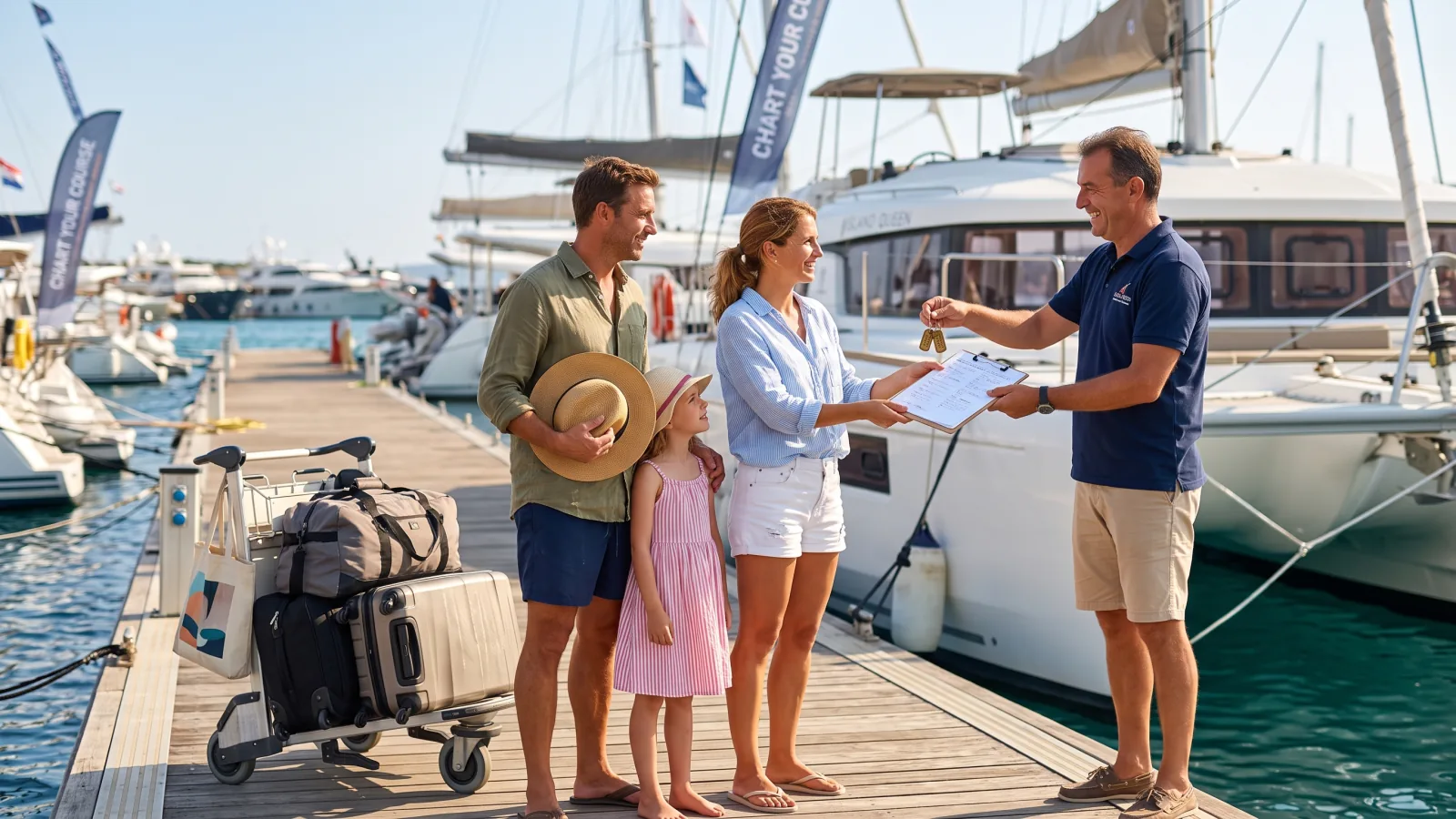
In weekly charter, revenue depends on two numbers: the price per week and the number of weeks sold. Operators usually work with:
- Seasonal price bands for high, mid and low season, reflecting demand in the destination.
- Fixed changeover days, often Saturday in the Mediterranean, which make turnarounds predictable.
- Early booking and long-stay discounts that fill the calendar in advance.
- Extras such as skippers, hosts, provisioning, transfers, water toys and one-way fees.
Occupancy is the key performance indicator. An empty week cannot be sold again later, so the best operators watch availability across the whole fleet and adjust promotions weeks in advance rather than days.
Distribution: How Charter Businesses Get Bookings
Charter companies usually sell through several channels at once:
- Direct bookings through their own website and repeat clients, which keep the full margin.
- Charter agents and brokers, who bring international clients in exchange for a commission. Many agents work with industry reservation systems such as Booking Manager and NauSYS to check availability.
- Online booking platforms for boat rental and day charters, which offer visibility to a large audience.
Selling on several channels only works when availability is updated in real time. A double booking in July is one of the most damaging mistakes a young charter company can make.
Operations: Check-In, Check-Out and Turnarounds
Operations are where a charter company earns its reputation. A structured routine protects both the boats and the guests:
- Before arrival: confirm crew lists, sailing qualifications for bareboat clients, arrival times and requested extras.
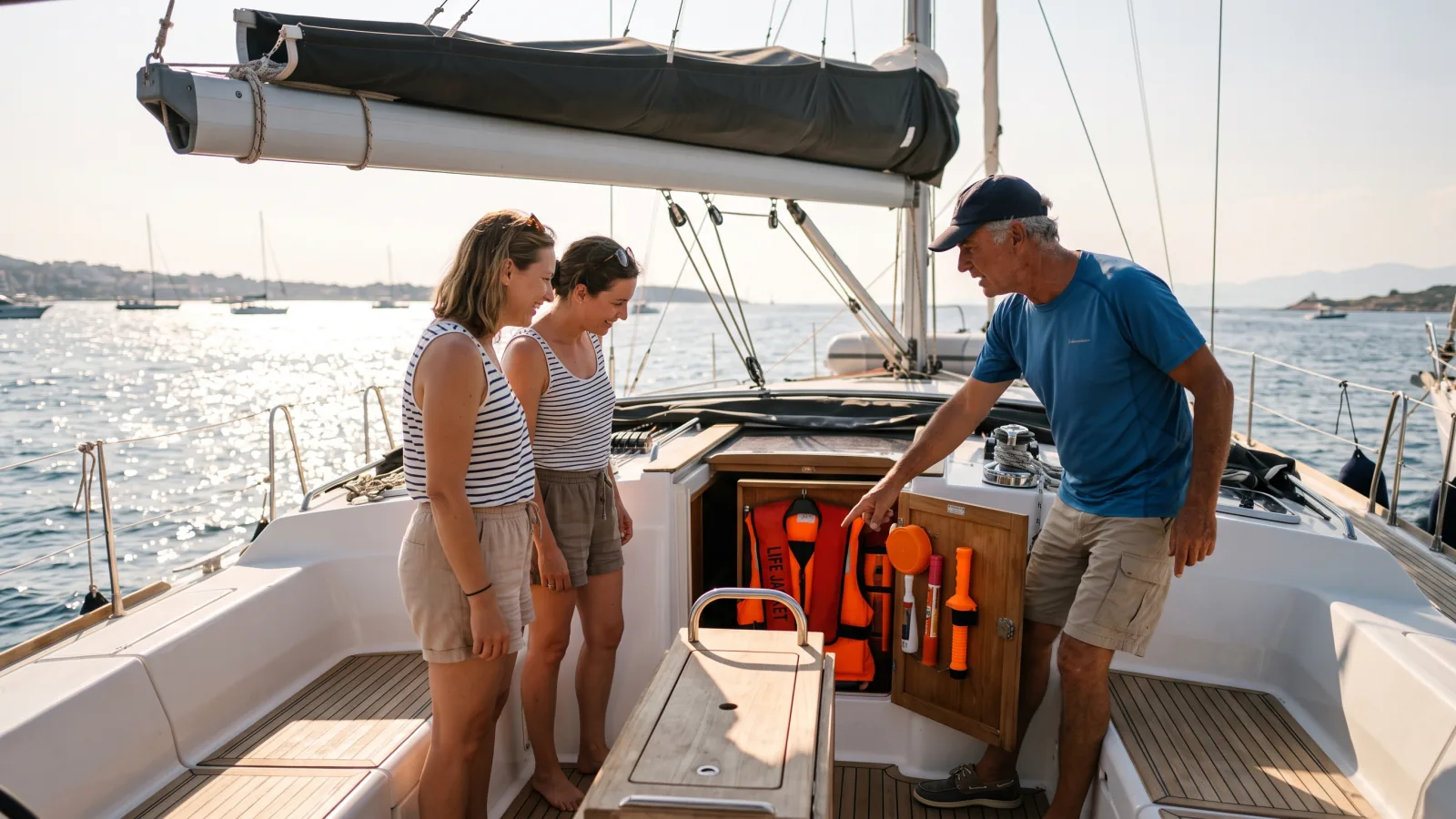
- Check-in: walk the guests through the boat, safety equipment and systems, and record the inventory and condition together.
- During the charter: provide a reachable support contact and clear guidance for technical problems or bad weather.
- Check-out: inspect the boat with the guests, record any damage with photos and settle the deposit fairly.
- Turnaround: cleaning, refuelling, water, laundry, minor repairs and inventory completed before the next guests arrive.
Your First Season: A Launch Timeline
Charter is a seasonal business, and the calendar decides much more than the size of the budget. Most bookings for the Mediterranean summer are made months in advance, so a company that opens its calendar in May has already missed a large part of the demand. A realistic timeline for a first season looks like this:
- Twelve months before: choose the destination and business model, take legal and tax advice, and start conversations with marinas about berths for the fleet.
- Nine to ten months before: secure the first boats, whether bought, financed or placed under management, and arrange commercial insurance.
- Eight months before: set up the booking system, prices, contracts and payment terms, and open the calendar to direct clients and agents.
- Six months before: photograph the boats, publish detailed specifications and start marketing through agents, platforms and your own website.
- Three months before: recruit seasonal staff and skippers, prepare check-in procedures and inventories, and plan maintenance windows.
- One month before: commission every boat, run a test handover with the team and confirm every booking and extra with guests.
The first season is also a learning season. Record every question guests ask, every repair that interrupted a charter and every booking lost to a competitor. That list is the best possible input for the second season's plan.
What to Agree with Owners in a Charter Management Programme
If some boats in the fleet belong to private owners, the relationship needs to be as well organised as the relationship with guests. Misunderstandings with owners are one of the most common reasons charter management partnerships end. A clear agreement usually covers:
- Revenue share or guaranteed income, and exactly how it is calculated after commissions and costs.
- Owner usage: how many weeks the owner can use the boat, and in which part of the season.
- Maintenance responsibilities: routine servicing, repairs, upgrades and who approves costs above a threshold.
- Insurance: who holds the policy, what it covers and how deductibles are shared.
- Reporting: regular statements showing bookings, revenue, costs and the condition of the boat.
- End of contract: notice periods and the condition in which the boat is returned.
Transparent, regular reporting builds the trust that keeps owners in the programme, and satisfied owners often recommend the operator to other owners, which is one of the most efficient ways to grow a fleet.
A Simple Business Plan Outline
Banks, investors and boat owners joining a management programme will ask for a plan. It does not need to be long, but it should answer these points:
- Business model and destination, with the reasons for choosing them.
- Market analysis: season, competition, target clients and price benchmarks.
- Fleet plan: number and type of boats, and how they will be acquired.
- Legal and insurance set-up for the chosen country.
- Sales plan: channels, commissions and marketing budget.
- Operations plan: base, staff, maintenance and turnaround process.
- Financial projections: bookable weeks, expected occupancy, revenue and costs for at least three seasons.
Common Mistakes New Charter Operators Make
- Overestimating occupancy in the first seasons, before the company has reviews and repeat clients.
- Underestimating maintenance and the cost of boats that cannot sail during peak weeks.
- Buying a mixed fleet that is hard to service and hard to brief.
- Managing availability in spreadsheets, leading to double bookings across channels.
- Weak contracts and check-out procedures, which turn every scratch into a dispute.
Running the Business on One Platform
As soon as a company has more than a couple of boats and more than one sales channel, bookings, contracts, payments and guest communication need to live in one place. The SupaSailing Charter module is designed for charter operators and brokers, with:
- Reservation system with calendar and availability across the fleet.
- Contract management and document templates for charter agreements.
- Proposals and brochure generation to answer enquiries quickly.
- Guest preference sheets and guest communication before and during the charter.
- Crew scheduling for skippered and crewed charters.
- Payment processing and financial reporting to follow revenue by boat and season.
For route planning, see our guide to Mediterranean charter itineraries, and before collecting guest data, read our article on GDPR for charter operators. If you are choosing a platform, our comparison of the best yacht charter management software covers the main options.
Frequently Asked Questions
Do I need a licence to start a boat rental business?
In most countries, yes, although the details vary. Boats used commercially typically need specific registration and safety requirements, skippers carrying paying guests need professional qualifications, and the business itself needs the usual commercial registrations. Local maritime and legal advice is essential.
What is the difference between bareboat and crewed charter?
In a bareboat charter the client skippers the yacht without professional crew. In a skippered or crewed charter the yacht comes with a skipper and, on larger boats, additional crew such as a host or chef.
How many boats do I need to start a charter company?
Many operators start with one to three boats to test the destination and processes before growing. Charter management agreements with private owners are a common way to expand the fleet without buying every boat.
How do charter companies find customers?
Through a mix of direct bookings on their own website, charter agents and brokers who receive a commission, and online booking platforms, especially for day charters and boat rental.
Is a yacht charter business profitable?
It can be, but profitability depends heavily on occupancy, pricing, maintenance costs and the length of the season. Operators who plan conservatively, standardise their fleet and control turnarounds are in the strongest position.
Final Thought
A successful charter business is built long before the first guests step on board. Choose the model, research the destination, settle the legal and insurance framework, and design operations that can scale. Then give the team a single system for bookings, contracts and guests, so growth does not turn into chaos. To see how the Charter module supports operators, request a demo or get in touch.
Related solutions
See how SupaSailing is built around these roles:
See SupaSailing in action
Book a free demo call and discover how one platform can run your charter, marina, fleet, shipyard or brokerage.
Book a Free DemoShare this article