AI in Yachting: Why the Industry Has a Data Problem, Not an AI Problem
"The yachting industry does not have an AI problem. It has a data problem."
That was the message Luca Longo, Co-Founder and CEO of SupaSailing, brought to the stage at the Estela Breakfast Seminar held on Thursday 30 April 2026 at Astilleros de Mallorca, during Palma International Boat Show week.
The session — "Beyond the Buzzword: How AI is Actually Changing Superyacht Operations" — gathered captains, operations directors, cybersecurity specialists, and academic researchers in one of the most substantive industry conversations of the week. The premise was uncomfortable but necessary: artificial intelligence in superyacht operations is moving from experimentation to real impact, but most of what the market calls "AI" is still a demonstration, not a product.
This article expands on the themes Luca Longo introduced — and explains why, at SupaSailing, we believe the next decade in maritime technology will be won by those who fix the foundations before chasing the headlines.
The Data Problem Nobody Wants to Talk About
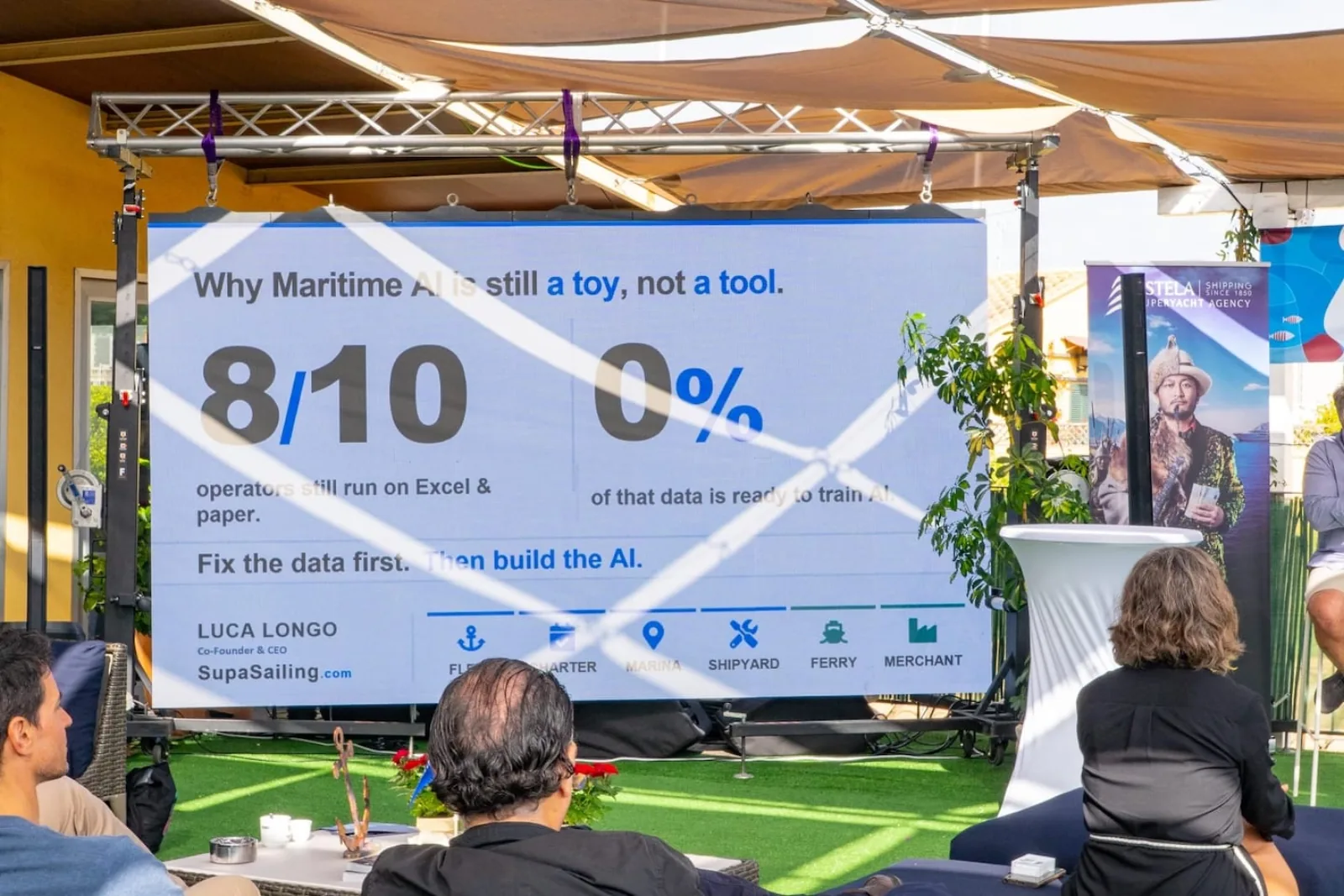
The slide that opened Luca's keynote was deliberately blunt. Two numbers, side by side:
- 8/10 — the share of maritime operators still running their core operations on Excel spreadsheets, WhatsApp messages, and paper logs.
- 0% — the share of that data ready, in any meaningful technical sense, to train an artificial intelligence model.
The gap between those two numbers is the single most important thing to understand about AI in yachting today. It is also the reason most "AI demos" you see at boat shows do not survive contact with operational reality.
Maritime data, as it exists today, lives in fragmented silos. Captains receive instructions through messaging apps. Maintenance is logged on paper. Equipment manuals are stored as PDFs in shared cloud folders managed by multiple people across multiple companies. Charter bookings move through email threads. Crew rotations are tracked in spreadsheets that nobody updates consistently.
None of this is structured. None of it is normalised across vessels. None of it is connected to the equipment it describes. And until that changes, what we currently call AI in yachting will remain exactly what it is now: a slideshow.
Digitisation Is Not the Same as Storage
One of the most clarifying contributions to the panel came from Captain Mannie Avenia of MY Inception. Manuals on large yachts have been digitised for over ten years, he reminded the audience. But having a PDF on Dropbox is not digitisation — it is filing.
True digitisation looks very different. It requires that documentation be:
- Linked to the specific equipment installed on a vessel — by serial number, by model, by installation date.
- Connected to the maintenance history of that equipment — every service, every part replaced, every anomaly logged.
- Searchable in natural language — so a chief engineer can ask "what's the recommended torque for the gearbox bolts on the starboard generator?" and get an answer in seconds, not hours.
- Translatable into the working languages of the crew — automatically, without having to hire human translators for every safety briefing.
- Integrated with the operational workflows around it — the planned maintenance schedule, the procurement system, the compliance reporting.
Anything less than this is archival. It is filing. It is the digital equivalent of putting a binder on a shelf.
Why a Single Platform Changes Everything
Here is the part of the conversation the industry rarely confronts directly. Most yacht management operations today run on four to five different platforms: a CRM for charter, a separate accounting tool, a planned maintenance system, a crew management app, a document repository, and a few spreadsheets glued together by email.
Each of those tools is a separate vendor relationship. Each one stores a slice of operational data in its own format. Each one has its own login, its own permission model, its own audit log, its own data retention policy. And each one is a separate attack surface.
This is not just an efficiency problem. It is a cybersecurity and privacy problem. When sensitive operational data — guest lists, port clearances, crew certifications, financial records — is fragmented across five systems, the security posture of the operation is only as strong as the weakest of those systems. Mario Soave of CleverFi made this point with precision during the panel: the moment fleet operational data becomes valuable enough to centralise, it also becomes a high-value target. Cybersecurity stops being an IT department concern and becomes a matter of business continuity.
A single integrated platform changes that equation. One identity model. One permission system. One audit log. One encryption boundary. One data residency commitment. One DPA. One vendor to assess for SOC 2, ISO 27001, and GDPR compliance — instead of five.
That is the architecture SupaSailing is built around. Not because integrated software is fashionable, but because it is the only way to make AI applications on top of fleet data both technically possible (through clean, normalised data) and operationally responsible (through unified security and privacy).
What AI Actually Does Well in Yachting Today
Once the data foundation is in place, AI starts to earn its keep. Not in the dramatic ways the headlines promise, but in the unglamorous, time-saving ways that experienced operators actually need.
Among the use cases that work today and produce measurable returns:
- Compliance documentation drafting — generating ISM Code reports, MLC 2006 hours-of-rest summaries, and port clearance paperwork in minutes instead of days, with a human review layer at the end.
- Manual retrieval at speed — finding the right procedure in a 400-page equipment manual by asking a question in natural language, instead of scrolling through indexes.
- Live multilingual safety briefings — translating the captain's morning briefing on the fly so every crew member receives it in their working language, with no information loss.
- Cross-fleet pattern detection — surfacing anomalies that no individual vessel can see in isolation, such as recurring failures of a specific generator model across an entire fleet.
- Charter demand forecasting — using machine learning to model booking patterns and recommend optimal pricing or fleet positioning, freed from the gut-feel guesswork that still dominates the segment.
- Predictive maintenance — flagging equipment that is statistically likely to fail in the next service interval, so dry-dock planning can be proactive instead of reactive.
Notice what is not on this list: autonomous yachts, AI captains, self-piloting marinas. These make great press releases. They are not what AI does well in 2026, and pretending otherwise has been one of the great disservices of the last twenty-four months of marketing.
Voices from the Panel
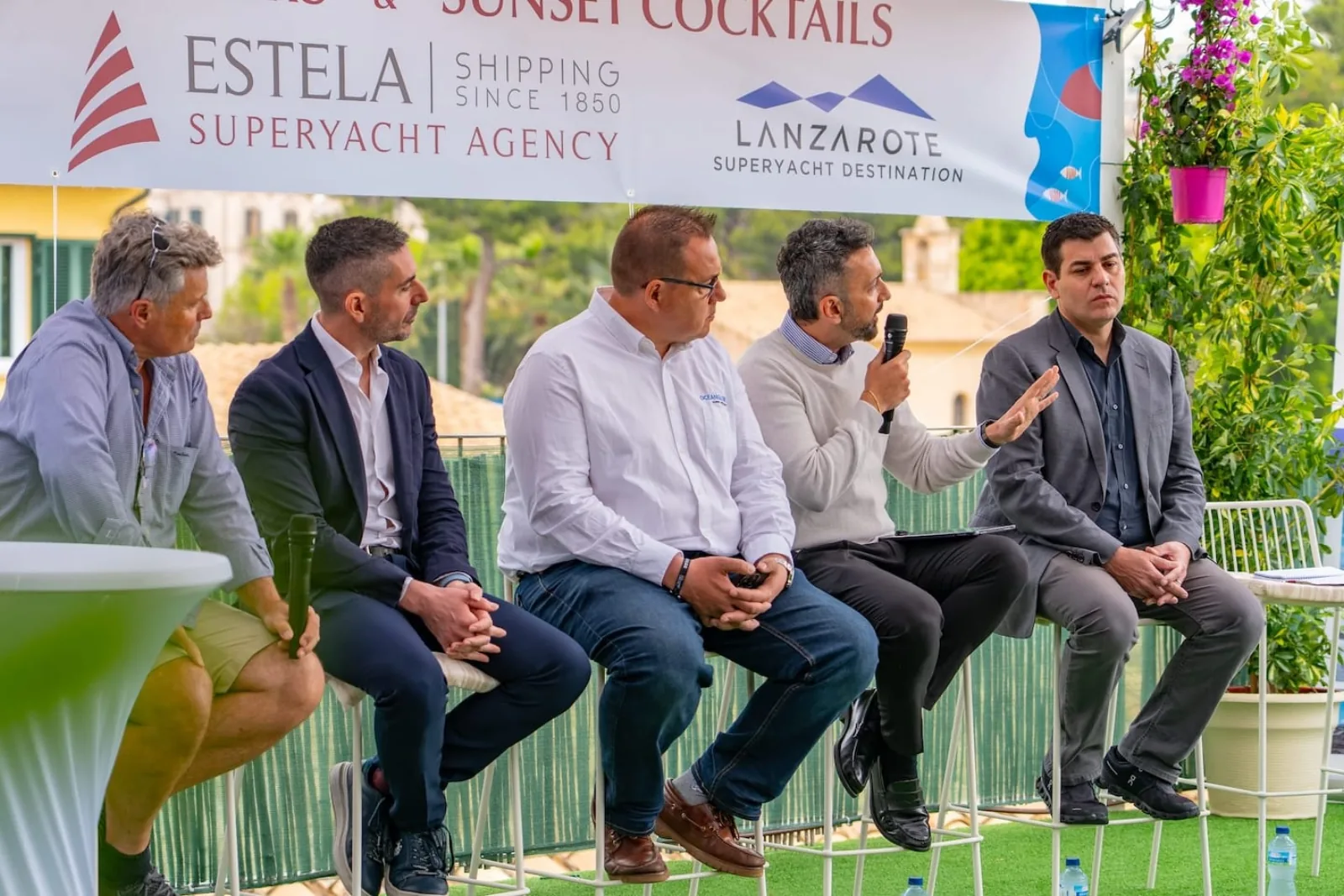
The strength of the seminar came from the deliberate heterogeneity of the speakers. Rather than five technology vendors with overlapping pitches, Estela gathered an active superyacht captain, an operational consultancy, a software founder, a cybersecurity specialist, and an academic AI researcher.
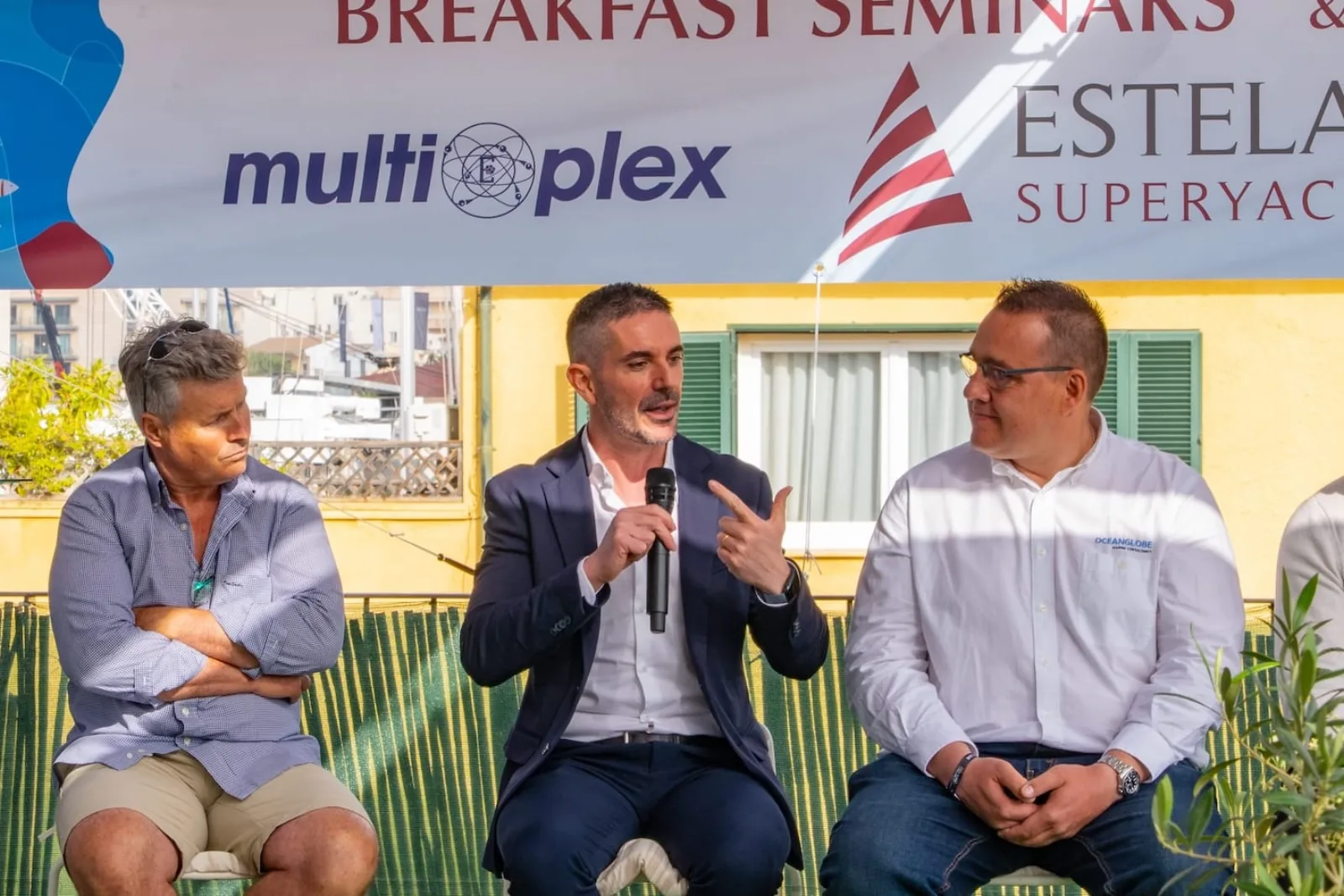
Professor Claudio Gallicchio of the University of Pisa offered the academic perspective with the intellectual honesty the topic deserves. Large language models are exceptionally good at pattern recognition and language generation. They are not, in any meaningful technical sense, reasoning. When a vendor promises that AI will "predict" engine failures, what is actually being described is a statistical model trained on sufficiently clean data — useful, real, economically valuable, but neither magical nor a substitute for human expertise.
Alberto Tablón Vega of OceanGlobe Marine Consultancy contributed the back-office and compliance perspective: the most immediate and measurable returns from AI in maritime today are not on the bridge, but in the administrative load borne by crews and shore-based teams. Reporting, compliance, documentation — these are the areas where time savings translate directly into operational margin.
Captain Mannie Avenia brought operational realism: on board, the gap between technological promise and daily reality remains significant, and earning a captain's trust requires far more than a product demo. AI tools have to fit into the actual workflows of the crew — not the workflows that look good on a slide.
Mario Soave of CleverFi addressed the under-discussed cybersecurity dimension. Centralising fleet operational data is a precondition for AI, but it also creates a high-value target. Architectural choices like tenant isolation, encryption, audit logging, and human-approved write operations are not optional features. They are the foundation of trust.
The conversation was moderated by Jens Oomes, Publisher of The Islander Magazine, with the balance and rhythm that distinguishes the best industry panels. The framing was careful, the questions were sharp, and the speakers were given the time to answer with substance instead of soundbites.
Looking Ahead: Infrastructure, Not Magic

Several conclusions emerged from the seminar that are worth retaining.
The maritime sector is now ready for an adult conversation about AI. The audience at Astilleros — captains, brokers, marina managers, owners, suppliers — was not asking to be sold to. It was asking to understand what works, what does not, and why. That shift in tone is significant. The era of "AI as a slide in a pitch deck" is ending, and the era of "AI as a measurable operational improvement" is beginning.
The industry does not need additional vendors of hype. It needs partners who do the unglamorous work: integrating with existing equipment manufacturers, normalising data across fragmented systems, designing for the security architecture that fleet-level data demands, and building tools that fit the workflows of people who actually operate vessels.
The next decade in maritime technology will not be won by the company with the most sophisticated AI model. It will be won by those who build the cleanest, most standardised operational data infrastructure underneath. Once that infrastructure exists — once the eight-out-of-ten on Excel becomes one-out-of-ten on integrated platforms — the AI applications follow naturally. Predictive maintenance across fleets becomes possible. So does anonymised benchmarking, sector-specific model development, and entirely new commercial relationships with insurers, regulators, and equipment manufacturers that today simply cannot be supported.
That is the work SupaSailing is engaged in. Not artificial intelligence as a feature, but operational infrastructure as a foundation. Charter management, marina operations, brokerage CRM, fleet management, refit project management, and ferry operations on a single, integrated, secure platform. Because that is the prerequisite — and because once that is in place, everything else becomes possible.
Acknowledgements
SupaSailing extends its thanks to Estela Shipping for curating one of the most substantive industry conversations of Palma Boat Show week 2026, and for the level of preparation that distinguished the seminar from the surrounding noise. Particular recognition goes to Jens Oomes and Sara Intonti for the editorial care brought to the framing and moderation of the panel, and to The Islander Magazine for their continued role as a thoughtful editorial voice in the sector.
If you would like to discuss any of the themes covered above — data architecture, integrated maritime platforms, AI use cases, or the security and privacy implications of fleet-level data — we would be glad to speak. Get in touch or request a demo of the SupaSailing platform.
Related solutions
See how SupaSailing is built around these roles:
See SupaSailing in action
Book a free demo call and discover how one platform can run your charter, marina, fleet, shipyard or brokerage.
Book a Free DemoShare this article