Fleet Maintenance Software: Reduce Costs and Extend Vessel Lifespan
A single unplanned vessel breakdown costs the average maritime operator far more than most managers realise. When you account for emergency repair premiums, lost charter revenue, port fees during extended layovers, crew costs during downtime, and the reputational damage that comes from cancelled client commitments, an unexpected engine failure can easily represent EUR 50,000 to EUR 200,000 in total impact. And yet, across the maritime industry, unplanned breakdowns remain a pervasive problem, driven largely by reactive maintenance cultures that respond to failures rather than preventing them. According to marine industry benchmarks, organisations that transition from reactive to preventive maintenance models reduce unplanned downtime by 30 to 50 percent within the first year. The tool that makes this transition operationally feasible at scale is fleet maintenance software. This guide examines how purpose-built vessel management platforms help maritime operators reduce costs, ensure compliance, and extend the operational lifespan of their fleet.
Whether you operate a fleet of charter yachts, commercial vessels, superyachts, or a mixed maritime portfolio, the fundamental challenge is the same: keeping complex, high-value mechanical and electrical systems in reliable operational condition across multiple vessels, with a team of technicians, under regulatory pressure, while simultaneously managing the financial pressure of keeping operating costs under control. This challenge is simply too complex to manage well with spreadsheets, paper work orders, and calendar reminders. Purpose-built fleet maintenance software addresses this complexity systematically, transforming an unpredictable operational environment into a managed, measurable, and continuously improving process.
Preventive Maintenance Scheduling: The Foundation of Cost Control
The single most impactful capability in any fleet maintenance software platform is systematic preventive maintenance scheduling. Rather than waiting for components to fail, preventive maintenance programmes schedule inspections, servicing, and part replacements at manufacturer-recommended intervals or based on operational hours, cycles, or calendar dates. When this process is managed digitally, every vessel in the fleet benefits from a structured maintenance programme that is consistently executed, automatically tracked, and never dependent on any single technician's memory or calendar.
Engine and Propulsion System Maintenance
Main engines, generators, and propulsion systems are typically the most expensive components in any vessel. Their maintenance schedules are complex: oil changes at defined running hour intervals, impeller replacements, heat exchanger servicing, turbocharger inspections, fuel system checks, and full overhauls at major hour milestones. A fleet maintenance software platform captures each vessel's engine hours automatically (or via manual log entries) and calculates due dates for every maintenance task based on the current reading versus the required interval. Technicians receive automated notifications well in advance of due dates, allowing maintenance to be scheduled at operationally convenient times rather than being forced by imminent failures.
Hull and Structural Inspections
Hull integrity, antifouling treatments, through-hull fitting inspections, and structural surveys are calendar-based tasks that must be coordinated with haul-out schedules and, in the case of commercial or classed vessels, with classification society surveys. Digital scheduling systems manage these requirements as structured recurring tasks linked to each vessel's profile, automatically flagging when haul-out windows need to be booked based on the service calendar for the upcoming period.
Spare Parts Inventory Management
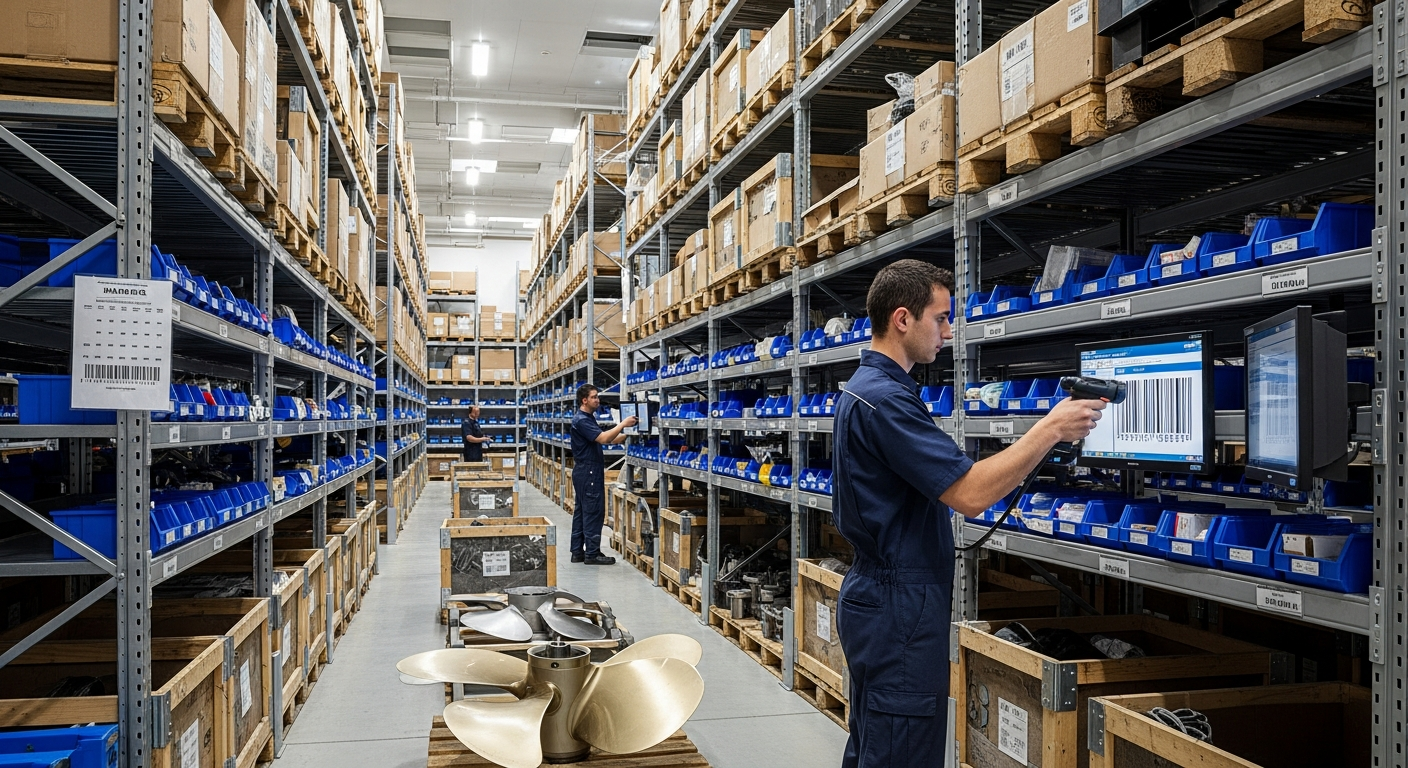
One of the most frustrating and costly aspects of vessel maintenance is discovering that the part needed for a critical repair is not in stock. Ordering an emergency part express freight to a remote marina or port can multiply the part cost several times over. For a well-managed fleet, maintaining the right inventory of critical spares is an essential element of operational readiness. However, overstocking ties up capital unnecessarily and can lead to parts deteriorating beyond their usable life before they are needed.
Purpose-built vessel management software includes dedicated inventory management modules that track spare parts across multiple locations: onboard storage, shore-based workshops, central warehouses, and supplier catalogues. Key capabilities include:
- Real-time stock levels with minimum quantity thresholds that trigger automatic reorder alerts
- Parts consumption history by vessel and component category, enabling data-driven stocking decisions
- Supplier integration for rapid quote and purchase order generation when parts need to be sourced urgently
- Part-to-vessel compatibility tracking to ensure the correct specifications are maintained for each vessel's components
- Expiry date management for time-sensitive items such as flares, EPIRBs, life raft inflation cartridges, and refrigerant gases
- Location tracking across a multi-vessel fleet to avoid situations where stock is theoretically available but physically inaccessible
Fleets that implement structured inventory management through dedicated software typically reduce emergency procurement costs by 40 to 60 percent and decrease the average duration of repairs due to parts availability improvements. Explore the SupaSailing fleet management platform to see how integrated inventory tools work alongside maintenance scheduling for complete operational control.
Compliance Tracking: Managing Class Surveys and Certifications
For commercial vessels, charter yachts operating under MCA or equivalent flag state regulations, and superyachts with classification society requirements, compliance management is not optional. Failure to maintain valid certificates and surveys can result in operational suspension, detention by port state control, insurance invalidation, and in the most serious cases, significant financial penalties and personal liability for the operator or owner. Managing compliance across a fleet of multiple vessels, each with its own unique portfolio of certificates and survey schedules, is an administrative task of considerable complexity.
Fleet maintenance software with integrated compliance tracking centralises all certificate and survey management in a single platform. Each vessel maintains a digital compliance register that includes:
- Classification society certificates (Bureau Veritas, Lloyd's Register, DNV, RINA) with survey dates
- Flag state certificates: Ship Safety Management certificate, Passenger Ship Safety, Load Line, Tonnage
- MCA / MARPOL compliance documentation for charter operations
- Insurance certificates and survey requirements tied to policy renewals
- SOLAS equipment certificates including life rafts, EPIRBs, fire detection systems
- Radio and navigation equipment certifications
- Crew certification records linked to vessel manning requirements
Automated Compliance Alerts and Escalation
The most critical feature in compliance management is proactive notification well before expiry dates. A well-configured vessel management system sends automated alerts at configurable intervals: typically 90 days, 60 days, and 30 days before certificate expiry, with escalating urgency and recipient lists. At 90 days, the maintenance coordinator is notified. At 60 days, the fleet manager is included. At 30 days, the owner or director receives a direct alert. This layered notification system eliminates the risk of certificates lapsing due to administrative oversight, a risk that increases significantly as fleet size grows beyond what a single administrator can reliably track manually.
Work Order Management and Technician Coordination
Effective fleet maintenance software replaces ad-hoc verbal instructions and paper work orders with a structured digital work order system. When a maintenance task is due, or a defect is reported, a formal work order is created in the system and assigned to a responsible technician or contractor. The work order includes all relevant technical documentation, parts required, estimated time, safety procedures, and acceptance criteria.
Technicians access their assigned work orders through mobile applications, allowing them to update progress, record parts consumed, attach photos of completed work, and close work orders with sign-off from qualified supervisors directly from the vessel or workshop. This creates a complete, auditable maintenance history for every vessel, without relying on paper records that can be lost or incomplete.
Work order management systems also enable better contractor management. When specialist contractors are needed for tasks beyond the capabilities of the in-house team, work orders can be issued externally with defined scope, budget, and quality requirements. All contractor activity is tracked within the same system, ensuring that externally performed maintenance is documented with the same rigour as internal work.
Defect Reporting and Corrective Action Tracking
Crew members are often the first to identify early signs of equipment issues: unusual vibrations, abnormal noises, performance degradation, or minor leaks. A well-designed fleet maintenance software platform provides crew with simple mobile tools to report defects immediately, with photographs and video if needed. These defect reports are automatically converted into corrective work orders and assigned for assessment and repair, ensuring that nothing observed in the field is lost before it can be addressed by the technical team.
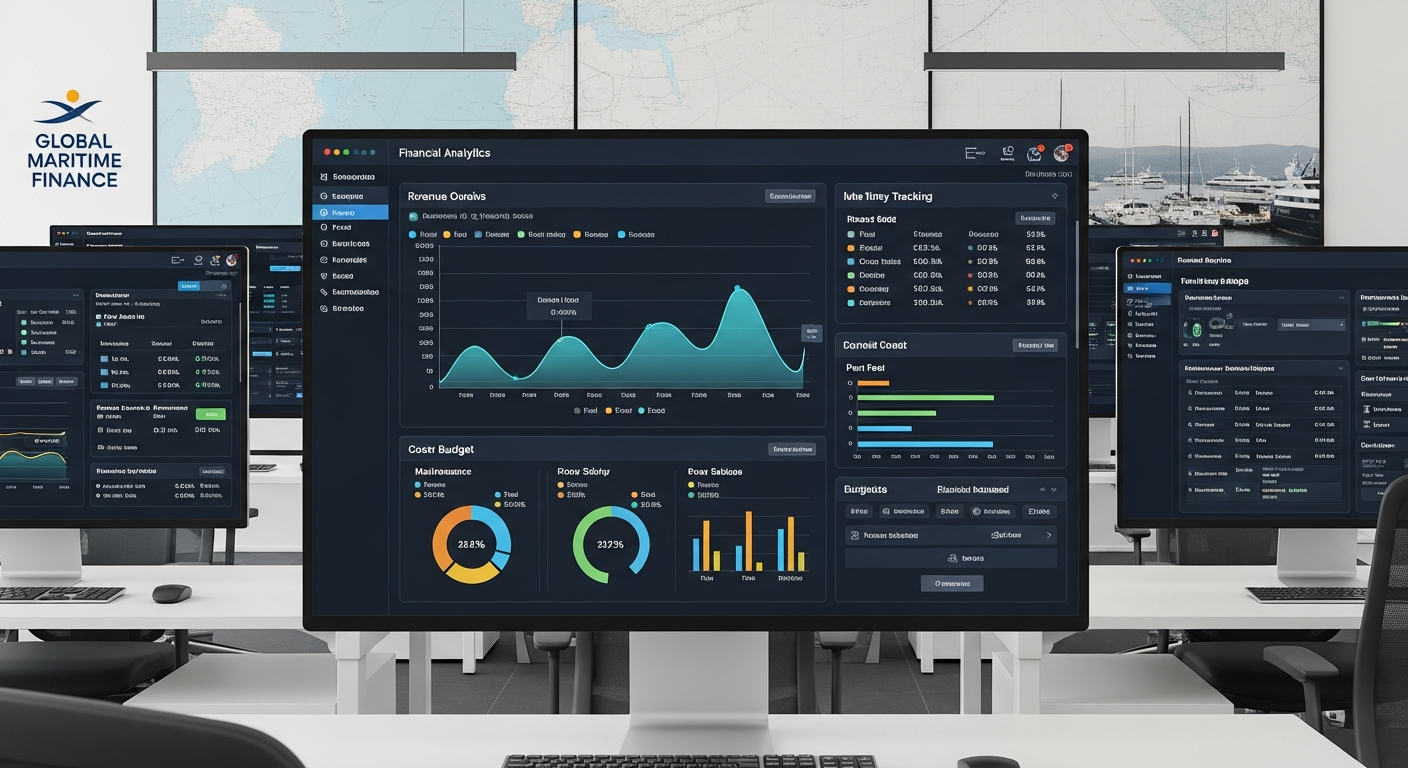
Cost Analytics and Budget Management
Understanding where maintenance costs are being incurred across a fleet is essential for informed financial management. Without structured data, fleet managers rely on estimates and historical averages that may not reflect the current condition of individual vessels or the true cost drivers in their operation. Fleet maintenance software captures all maintenance activity against a structured cost coding framework, enabling detailed analysis at multiple levels.
A comprehensive cost analytics module allows operators to view maintenance expenditure by vessel, by system category, by maintenance type (preventive versus corrective), by time period, and by crew or contractor performing the work. This level of visibility enables several critical management capabilities:
- Budget variance analysis - comparing actual maintenance spend against forecast budgets in real time
- Cost per operating hour metrics for each vessel, enabling accurate charter pricing and vessel performance benchmarking
- Capital investment planning - identifying vessels approaching the point where refurbishment or replacement is more cost-effective than continued maintenance
- Warranty claim management - tracking components within warranty and ensuring claims are made before coverage expires
- Contractor performance analysis - comparing costs and quality between service providers for the same category of work
Fleet operators who leverage detailed cost analytics consistently identify maintenance budget savings of 15 to 25 percent through better contractor negotiation, elimination of unnecessary preventive tasks, and optimised parts sourcing. The data provides the evidence base for investment decisions and supports accurate long-range financial planning for fleet owners and operators. The SupaSailing solutions platform integrates maintenance cost analytics with broader financial management for a complete operational financial picture.
Integration with Fleet Operations and Charter Management
Maintenance software delivers maximum value when it is integrated with broader fleet operational systems rather than functioning as an isolated module. In a charter fleet context, the maintenance calendar needs to be synchronised with the charter booking schedule to ensure that haul-outs, major services, and extended maintenance periods are planned during low-season windows and do not conflict with committed charter bookings.
Integration with charter management software allows the system to automatically block maintenance windows in the vessel's availability calendar, preventing double-bookings and ensuring that vessels are returned to charter-ready condition before the next booking. Similarly, integration with crew management systems ensures that qualified crew or technicians are scheduled alongside maintenance tasks, and that crew certifications and medical requirements are tracked alongside vessel compliance requirements in a unified management view.
For fleets operating across multiple marinas or home ports, integration with marina management systems provides berth availability information that can be factored into haul-out planning and maintenance scheduling, reducing the costs associated with last-minute berth booking and uncoordinated vessel movements between locations.
ROI and Financial Impact of Fleet Maintenance Software
The business case for investing in dedicated fleet maintenance software is compelling and well-supported by operator experience data across the maritime industry. Organisations that make the transition from reactive, paper-based, or spreadsheet-driven maintenance management to purpose-built digital platforms consistently report measurable improvements:
- 30-50% reduction in unplanned downtime through systematic preventive maintenance and early defect detection
- 20-35% decrease in total annual maintenance expenditure through optimised scheduling, better parts management, and reduced emergency repair premiums
- 40-60% reduction in emergency parts procurement costs through structured inventory management and minimum stock controls
- Zero compliance failures when automated certification tracking and multi-level alert systems are properly configured
- 15-25% extension in average vessel operational lifespan through consistent preventive care and early intervention on developing issues
- 25-40% improvement in technician productivity through structured work order management and mobile tools that eliminate administrative overhead
For a fleet operator running five to ten vessels with a combined annual maintenance budget of EUR 500,000, these improvements represent potential savings of EUR 100,000 to EUR 175,000 per year, with additional upside from improved asset longevity and reduced capital replacement costs over time.
FAQ: Fleet Maintenance Software
What is fleet maintenance software and how does it work?
Fleet maintenance software is a digital platform that manages all aspects of vessel maintenance including preventive maintenance scheduling, work order management, spare parts inventory, compliance certificate tracking, and cost analytics. It works by centralising all maintenance data for a fleet in a single system, automating notifications and scheduling, and providing real-time visibility into the maintenance status, compliance position, and cost performance of every vessel in the fleet.
How does fleet maintenance software help with compliance and class survey management?
Fleet maintenance software maintains a complete digital compliance register for each vessel, tracking all certificates, class surveys, and regulatory requirements with their expiry dates. Automated multi-level alerts notify the relevant team members at configurable intervals before any certificate expires, ensuring that surveys are scheduled and paperwork is prepared in advance. This eliminates the risk of certificate lapses due to administrative oversight, which can result in vessel detentions and operational suspensions.
What is the typical cost reduction from implementing fleet maintenance software?
Maritime operators typically achieve total maintenance cost reductions of 20 to 35 percent after implementing dedicated fleet maintenance software, driven by reductions in unplanned breakdowns, optimised preventive maintenance intervals, better spare parts management, and more effective contractor management. Most operators achieve full return on investment within 12 to 18 months of deployment.
Conclusion: Building a Reliable, Cost-Efficient Fleet with the Right Software
For any maritime operator, the health of the fleet is the foundation of the business. Vessels that are unreliable, out of compliance, or consuming maintenance budgets beyond their operational value are a liability that undermines commercial performance and reputation alike. Fleet maintenance software provides the systematic tools to change this: replacing reactive firefighting with planned, data-driven vessel management that reduces costs, ensures compliance, and extends the productive life of every vessel in the portfolio. The operators who invest in these capabilities today are building fleets that are more competitive, more reliable, and more financially sustainable for the long term. Discover how SupaSailing's fleet management platform can help your operation achieve these results, with integrated maintenance, compliance, and cost management built for the demands of professional maritime operations.
See SupaSailing in action
Book a free demo call and discover how one platform can run your charter, marina, fleet, shipyard or brokerage.
Book a Free DemoShare this article