AI and Automation Trends in Maritime Software for 2025
The maritime industry is at a technological inflection point. According to the International Maritime Organization, over 60% of maritime incidents are attributable to human error — a statistic that has remained stubbornly persistent for decades despite improvements in training and safety protocols. Yet something fundamental is changing in 2025: artificial intelligence and automation are no longer aspirational concepts discussed at maritime conferences. They are live, operational systems reshaping how fleets are managed, how charters are booked, and how marinas are run.
From predictive maintenance algorithms that flag engine failures weeks before they happen, to AI-powered route optimization tools that cut fuel consumption by 15% on transatlantic voyages, the transformation is measurable and accelerating. The global maritime software market is projected to exceed $9.2 billion by 2027, driven largely by demand for AI-integrated solutions. For fleet operators, charter companies, and marina managers who have not yet embraced this wave, the competitive gap is widening fast.
This article examines the most significant AI and automation trends in maritime software shaping the industry in 2025, with a focus on practical applications that deliver measurable returns — not theoretical promises.
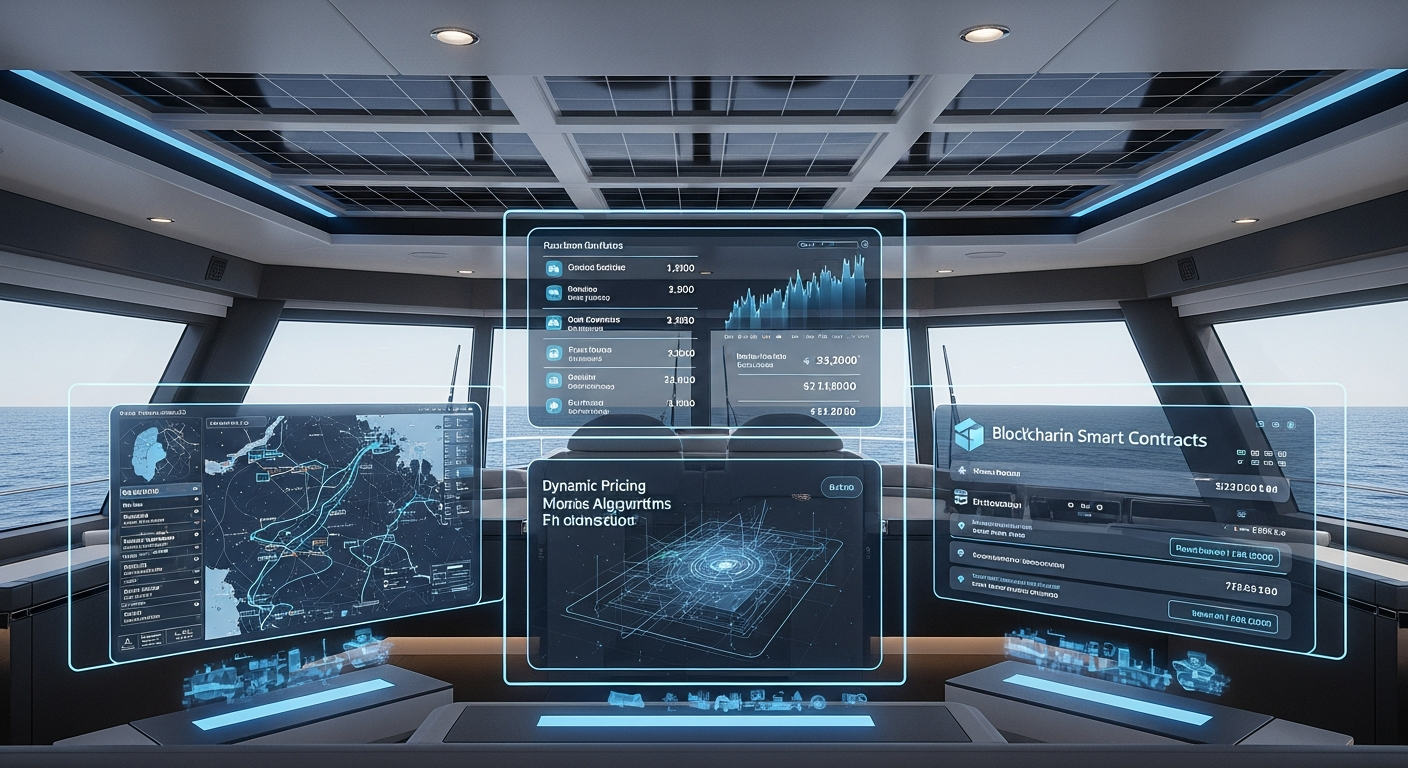
Predictive Maintenance: From Reactive to Proactive Fleet Management
Traditional vessel maintenance has always been either calendar-based (service every 500 hours regardless of condition) or reactive (fix it when it breaks). Both approaches are expensive. Calendar-based maintenance often replaces components that still have significant service life remaining. Reactive maintenance generates emergency costs, unplanned downtime, and sometimes catastrophic failures at sea.
AI-driven predictive maintenance changes this calculus entirely. Modern fleet management software now integrates with onboard IoT sensors — monitoring vibration patterns in propulsion systems, oil viscosity changes, exhaust temperatures, and dozens of other variables — to build machine-learning models of normal operating behavior. When sensor readings deviate from established baselines, the system flags the anomaly and generates a maintenance recommendation, often two to six weeks before a physical symptom would be noticeable to crew.
Real-World Impact of Predictive Maintenance
The numbers are compelling. Fleet operators who have implemented sensor-based predictive maintenance programs report:
- 25–40% reduction in unplanned maintenance costs
- Up to 70% decrease in major engine overhaul frequency
- 15–20% improvement in vessel availability rates
- Significant reduction in emergency port diversions
For charter operators managing premium vessels, the benefits extend beyond cost savings. A yacht that is reliably available — never cancelled due to unexpected mechanical failure — commands premium rates and builds the repeat-client loyalty that drives long-term revenue. SupaSailing's fleet management module integrates predictive maintenance scheduling directly into vessel operational calendars, ensuring maintenance windows are planned around charter bookings rather than disrupting them.
Route Optimization and AI-Powered Navigation
Fuel represents 40–60% of operational costs for most commercial maritime operators. Even for the superyacht and charter sector, where guest experience often takes priority over fuel economy, route efficiency matters — both for environmental compliance and operational margins.
AI route optimization tools in 2025 go far beyond plotting the shortest geographic path. Modern algorithms simultaneously model:
- Weather routing — integrating real-time and forecast meteorological data to route around adverse conditions
- Current optimization — leveraging ocean current patterns to reduce fuel burn
- Port congestion data — avoiding arrival at congested berths where waiting at anchor is costly
- Speed optimization — calculating the most fuel-efficient speed profile for a given voyage
- Regulatory compliance zones — automatically routing around emissions-controlled areas (ECAs) where LNG or alternative fuels may be required
Leading operators using AI route optimization are reporting fuel savings of 12–18% on typical voyages. At current fuel prices, this translates to hundreds of thousands of dollars annually for mid-size commercial fleets. For superyacht operators conducting Mediterranean or Caribbean seasons, the savings are material enough to influence pricing strategy.
Automated Booking Systems and Charter Operations
The charter market has historically suffered from an operational paradox: demand for premium experiences is high, but the booking process is administratively burdensome. Enquiries arrive through multiple channels, availability is tracked in spreadsheets, deposits are chased manually, and crew briefings happen via fragmented email chains. The result is a poor client experience and significant operational overhead.
Automated charter management software is resolving this friction point systematically. In 2025, the leading platforms offer:
Intelligent Availability Management
Real-time availability calendars that sync across all distribution channels — direct website, broker platforms, OTA partnerships — eliminating double bookings and ensuring accurate information is always presented to prospective clients. When a booking is confirmed in any channel, all other channels are updated instantly.
Automated Guest Communication Workflows
From the moment an enquiry is received, automated workflows manage the client journey: acknowledgement emails, quote delivery, contract generation and e-signature collection, deposit payment links, pre-arrival preference surveys, and post-charter feedback requests. What previously required multiple staff hours per booking now runs with minimal human intervention.
Dynamic Pricing Algorithms
Charter rates are increasingly managed by AI pricing engines that consider seasonality, fleet availability, competitive rates, and demand signals to optimize yield. Similar to airline revenue management systems, these tools increase rates when demand is high and offer strategic discounts to fill gaps in the calendar — maximizing annual revenue per vessel.
The charter management solutions at SupaSailing incorporate all three of these automation layers, enabling operators to manage larger fleets with smaller administrative teams.
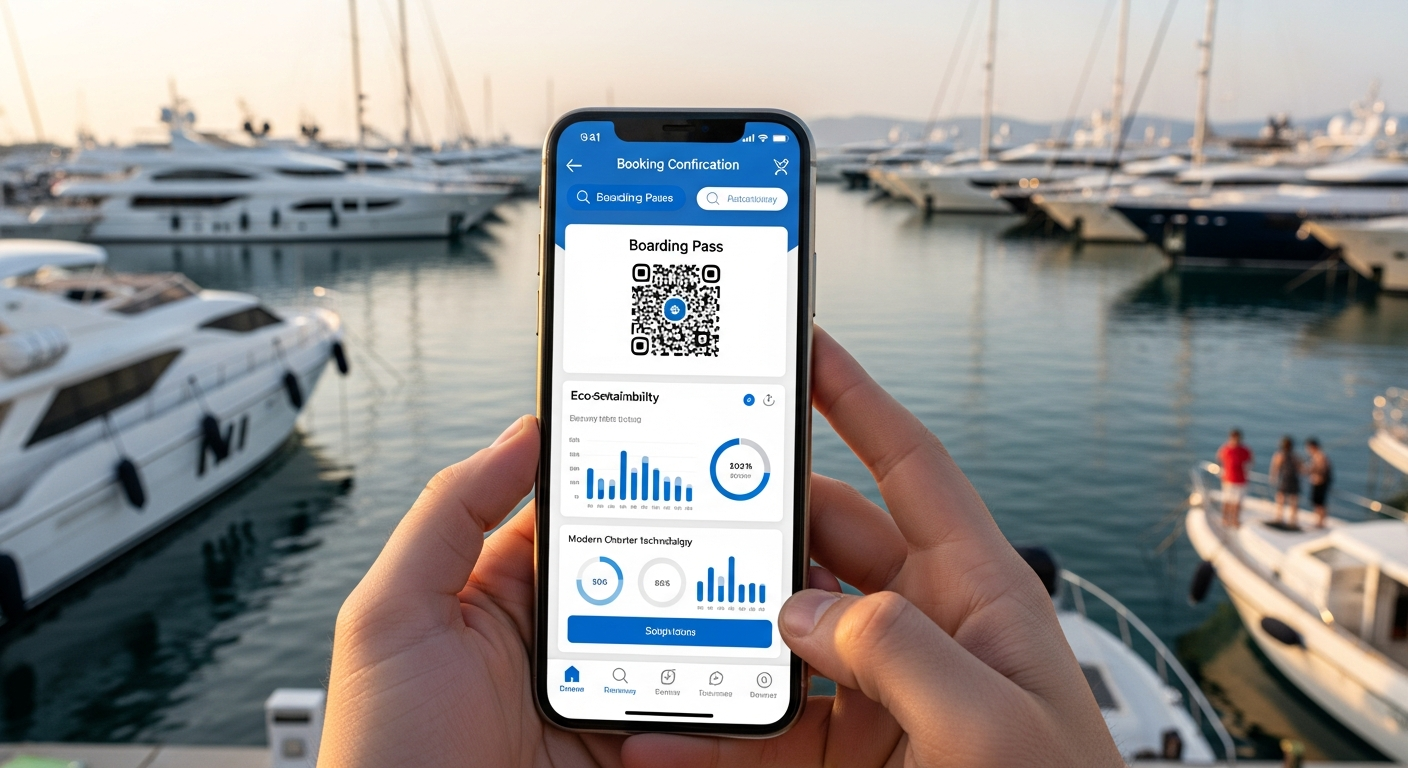
AI-Powered Analytics and Business Intelligence
Data has always been generated in abundance by maritime operations. Until recently, most of it was never analyzed. Log books, fuel records, maintenance histories, booking patterns, crew certifications, port costs — this information sat in siloed systems or physical files, providing no operational insight.
Modern maritime software platforms in 2025 apply AI analytics engines to this data trove, surfacing insights that were previously invisible:
- Fleet profitability analysis — which vessels generate the highest return on investment, accounting for all operational costs
- Crew performance analytics — fuel consumption benchmarking by captain, guest satisfaction scores correlated with crew assignments
- Seasonal demand modeling — predicting booking surges six to twelve months ahead to inform pricing and fleet positioning decisions
- Maintenance cost trending — identifying which vessel systems are generating disproportionate repair costs, informing future procurement decisions
- Regulatory risk dashboards — real-time compliance status across the fleet, flagging vessels at risk of certificate lapse or inspection failure
The shift from backward-looking reporting to forward-looking prediction is where AI delivers its most transformative value. Fleet operators are no longer asking "what happened?" — they are asking "what will happen, and how do we prepare?"
Crew Management Automation
Crew management is one of the most administratively intensive aspects of operating a commercial or charter fleet. Qualifications must be tracked and renewed (STCW certificates, medical certificates, flag state endorsements), scheduling must comply with MLC 2006 rest hour requirements, payroll must account for multiple nationalities and tax jurisdictions, and crewing agencies must be coordinated for last-minute replacements.
AI-powered crew management modules address each of these pain points:
- Automated certificate expiry alerts — notifications to crew and management 90, 60, and 30 days before any qualification expires
- Rest hour compliance monitoring — real-time tracking of work/rest records against MLC 2006 requirements, with automated alerts when crew approach violation thresholds
- Intelligent scheduling — roster optimization that satisfies operational requirements while ensuring compliance and minimizing crew fatigue
- Multi-currency payroll integration — automated wage calculations accounting for sea time, overtime, and jurisdiction-specific tax rules
Operators using automated crew management systems report a 60–80% reduction in compliance-related administrative time, and near-zero instances of vessels detained due to expired certifications.
Regulatory Compliance Automation: Staying Ahead of IMO 2030
The regulatory environment for maritime operations has never been more demanding. The IMO's Carbon Intensity Indicator (CII) framework, EEXI requirements for existing ships, and the impending IMO 2030 targets for greenhouse gas reduction are creating substantial compliance burdens for fleet operators. In parallel, Port State Control inspections are becoming more sophisticated, with deficiency rates affecting vessel commercial viability.
Compliance automation tools built into modern maritime management software address this challenge by:
- Continuously calculating CII ratings and projecting year-end performance against targets
- Generating flag state reports and statutory submissions automatically
- Maintaining an audit-ready digital record of all safety management system documentation
- Tracking Port State Control history and flagging patterns that indicate inspection risk
- Integrating with class society portals to manage survey schedules and condition monitoring data
For operators managing multiple flag states and trading areas, integrated maritime software solutions that consolidate compliance management into a single platform are not a luxury — they are a competitive and regulatory necessity.
The ROI of AI and Automation in Maritime Operations
Skeptics of technology investment often ask for the business case. In maritime, the numbers are now well-established:
- Predictive maintenance: Typical ROI of 3:1 to 5:1 within 24 months, with payback periods of 8–14 months
- Route optimization: 12–18% fuel savings translating to $50,000–$300,000 annually per vessel depending on size and utilization
- Charter booking automation: 40–60% reduction in booking administration time, enabling operators to handle 30–50% more bookings with the same team
- Crew management automation: Compliance violation costs (Port State Control detentions, flag state penalties) reduced by 75–90%
- Analytics and BI: Operators report 8–15% improvement in overall fleet profitability through data-driven operational decisions within 12 months
Across a mid-size charter fleet of five to ten vessels, these combined benefits typically represent $500,000 to $2 million in annual value — with platform costs that are a fraction of this figure.
Frequently Asked Questions
What is the biggest barrier to adopting AI in maritime fleet management?
The most common barrier is legacy system fragmentation. Many operators maintain separate systems for maintenance, crew, bookings, and compliance — and AI tools require integrated data to function effectively. Modern platforms like SupaSailing's address this by providing unified data architecture from day one, eliminating the integration challenge.
How long does it take to implement maritime management software with AI features?
For a mid-size fleet, implementation typically takes four to twelve weeks depending on data migration complexity and the number of integrations required. Cloud-native platforms can often be operational within two weeks for core modules, with advanced AI features activated progressively as data accumulates.
Is AI route optimization relevant for charter yachts, or only commercial shipping?
Route optimization is highly relevant for charter operations, particularly for yachts operating extended itineraries in the Mediterranean, Caribbean, or Pacific. Weather routing alone can improve safety outcomes and fuel efficiency significantly. For yachts with a specific environmental positioning, optimized routing also supports sustainability credentials valued by eco-conscious charter clients.
Conclusion
The maritime industry's AI and automation transformation is not a future trend — it is present reality. Fleet operators, charter companies, and marina managers who implement intelligent software platforms today are building operational advantages that will compound over time: lower costs, higher reliability, better compliance, and superior client experiences.
The question is no longer whether to adopt AI-powered maritime software, but how to select the right platform and implementation partner. SupaSailing provides an integrated maritime software suite that brings predictive maintenance, automated charter management, AI analytics, and compliance automation together in a single platform designed for the modern maritime operator. Contact our team to explore how these tools can transform your fleet operations.
See SupaSailing in action
Book a free demo call and discover how one platform can run your charter, marina, fleet, shipyard or brokerage.
Book a Free DemoShare this article