Marina Management Software: Boost Revenue and Streamline Operations
Most marina managers are leaving significant revenue on the table — not through poor service or inadequate facilities, but through operational inefficiency that is entirely preventable. Industry benchmarking data consistently shows that marinas using modern marina management software achieve occupancy rates 12–20 percentage points higher than comparable facilities relying on manual systems. At a marina generating $3 million in annual berth revenue, that gap represents $360,000 to $600,000 in additional revenue per year.
The traditional marina management model — paper-based berth books, manual invoicing, phone-only reservations, and reactive maintenance — was workable when competition was limited and customers had few alternatives. In 2025, that model is no longer viable. Boat owners increasingly compare their marina experience to the best of hospitality: they expect online booking, instant confirmations, transparent pricing, and digital communication. Marinas that deliver this experience attract and retain customers. Those that do not lose them to competitors who do.
This article examines how modern marina software transforms operations across five critical areas: berth and facility management, revenue optimization, customer experience, maintenance management, and financial reporting. We include specific performance benchmarks so you can assess the potential impact on your facility.
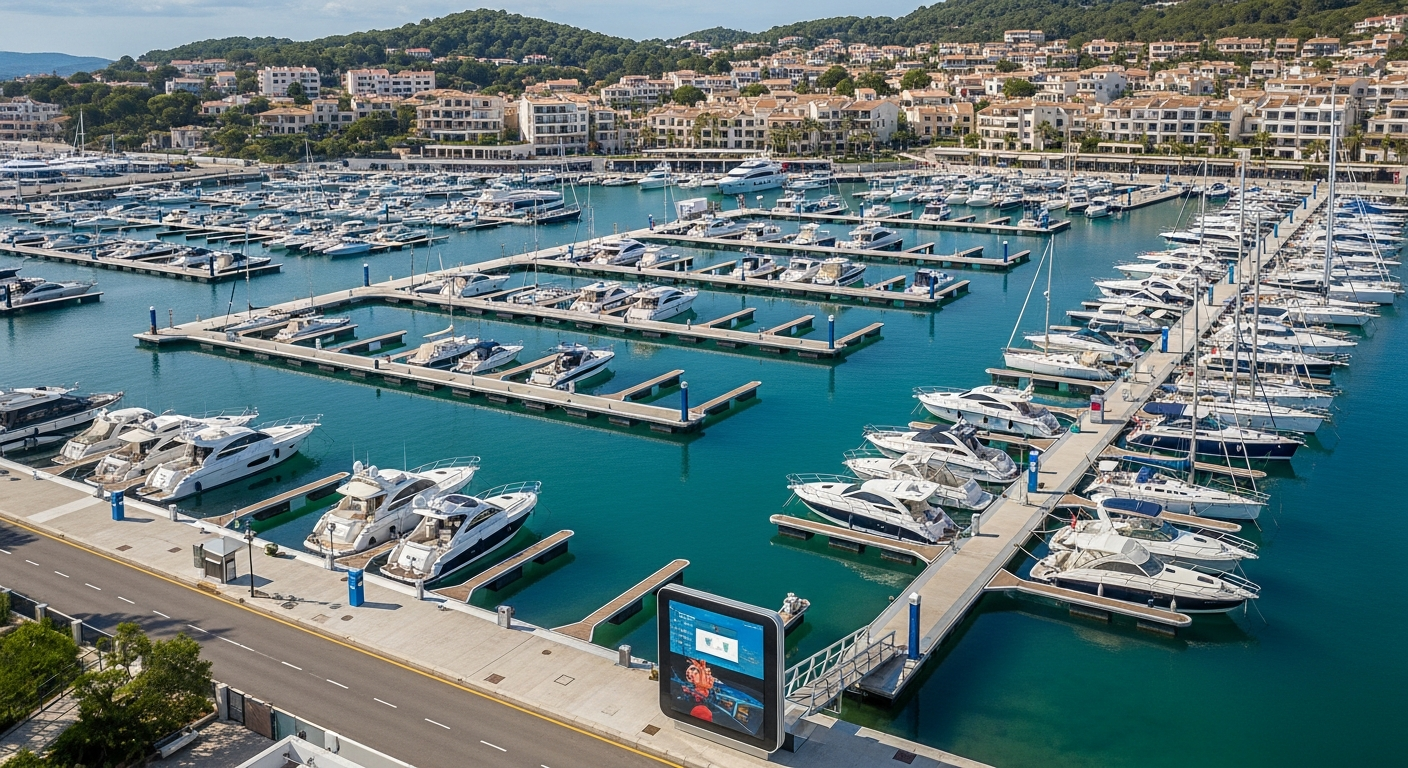
Berth Management: From Paper Charts to Real-Time Digital Maps
The berth — or slip — is a marina's primary asset. Effective berth management directly determines occupancy rates, customer satisfaction, and revenue generation. Yet many marinas still manage their berths using paper charts, whiteboards, or basic spreadsheets. These tools share a fundamental limitation: they cannot provide real-time visibility, support dynamic allocation, or generate the data needed for intelligent management decisions.
Modern berth booking software replaces static paper records with interactive digital marina maps that display real-time occupancy status for every berth. Each berth's record contains its dimensions (length overall, beam, draft clearance), power and water connections, accessibility features, and current reservation status. When a visiting vessel arrives or a reservation is modified, the map updates instantly across all interfaces.
Intelligent Berth Allocation
Beyond simple record-keeping, advanced marina management platforms use algorithms to optimize berth allocation. When a new reservation is received — specifying vessel dimensions, desired dates, and service requirements — the system automatically identifies appropriate berths from available inventory, considering:
- Vessel length, beam, and draft against berth specifications
- Power requirements (32A, 63A, three-phase) against berth provision
- Preferred location within the marina (inner harbour, outer pontoon, etc.)
- Access requirements for disabled crew or passengers
- Proximity to requested facilities (fuel dock, chandlery, restaurant)
This intelligent allocation maximizes the utilization of premium berths, ensures suitable placement for all vessel types, and reduces the manual workload on marina office staff who would otherwise manage allocation manually.
Seasonal and Annual Berth Management
Marinas typically manage two distinct customer segments: seasonal/annual berth holders who occupy the same berth throughout the season, and transient visitors who arrive for one to several nights. Effective software manages both simultaneously.
Annual berth holder management includes automated renewal contracts, direct debit payment collection, and proactive communication about seasonal opening dates, facility upgrades, and marina news. Transient visitor management includes online booking, instant confirmation, check-in and check-out workflows, and automated billing.
Online Booking and the Digital Customer Journey
The single most impactful technology change most marinas can make in 2025 is implementing online berth booking capability. The numbers are unambiguous: marinas that offer online reservation report 30–45% higher transient occupancy compared to phone-and-email-only operations, driven by three factors.
First, availability is 24/7. Sailors planning passages often research and book berths in the evenings or at weekends, when marina offices are closed. A marina that cannot accept bookings outside office hours is invisible to this demand.
Second, the booking process is instant and frictionless. Boat owners increasingly expect to complete a reservation in three to five minutes — search availability, select dates and berth type, pay deposit, receive confirmation. Requiring a phone call or email exchange introduces friction that converts into abandoned bookings.
Third, online booking enables advance planning. Sailors organizing extended cruises want to confirm berths weeks or months ahead. Online availability visibility makes this possible; phone-based systems often cannot provide reliable advance booking for transient berths.
Channel Management and Integration
Modern marina management software connects your direct booking channel with third-party marina booking platforms — services like Noforeignland, Navily, and marina-specific OTAs — ensuring that availability is consistent across all channels. When a berth is reserved through any channel, inventory is instantly updated everywhere, preventing double bookings and maximizing occupancy.
Dynamic Pricing and Revenue Optimisation
Most marinas use a simple pricing structure: published rates by vessel length category, perhaps with a high-season and low-season variation. This static approach leaves significant revenue on the table. During peak season — August in the Mediterranean, July 4th week in New England, Christmas in the Caribbean — marinas often cannot accommodate all demand. During shoulder and off-peak periods, berths sit empty at rates that fail to attract sufficient transient traffic.
Dynamic pricing engines built into advanced marina management software address both problems. Drawing on occupancy history, forward reservations, and real-time availability, these systems automatically adjust pricing to:
- Capture peak demand value — increasing rates when occupancy approaches capacity during high-demand periods, extracting additional revenue from demand that would exist regardless of price
- Stimulate off-peak demand — offering strategic discounts during traditionally slow periods to attract value-conscious boaters who would otherwise choose anchoring or competing facilities
- Reward advance booking — early reservation discounts that lock in occupancy and improve forward revenue visibility
- Price by berth category — premium berths (nearest to facilities, best views, easiest access) priced at a premium above standard inventory
Marinas implementing dynamic pricing consistently report 8–15% improvement in annual berth revenue compared to static pricing, with no increase in facility costs.
Customer Portal and Digital Self-Service
Customer service is one of the most significant operational cost drivers for marina management. Phone calls to check availability, requests for utility reading confirmations, questions about invoices, lost access cards — each interaction requires staff time. Aggregated across hundreds of berth holders, this represents a substantial workload.
A customer portal — a secure online interface where berth holders and visiting customers can manage their relationship with the marina — dramatically reduces this overhead while simultaneously improving customer satisfaction. Portal capabilities typically include:
- Reservation management — viewing existing bookings, modifying dates, making additional reservations
- Invoice access and payment — downloading invoices, making payments online, viewing payment history
- Utility consumption tracking — monitoring electricity and water consumption in real-time, enabling cost awareness
- Marina communication — receiving marina news, maintenance notices, and events information
- Facility requests — submitting maintenance requests, requesting travel lift bookings, ordering additional services
Marinas that deploy customer portals typically see a 40–60% reduction in inbound phone and email queries, freeing staff to focus on value-added customer interactions and operational management. SupaSailing's marina management platform includes a fully featured customer portal with mobile app access.
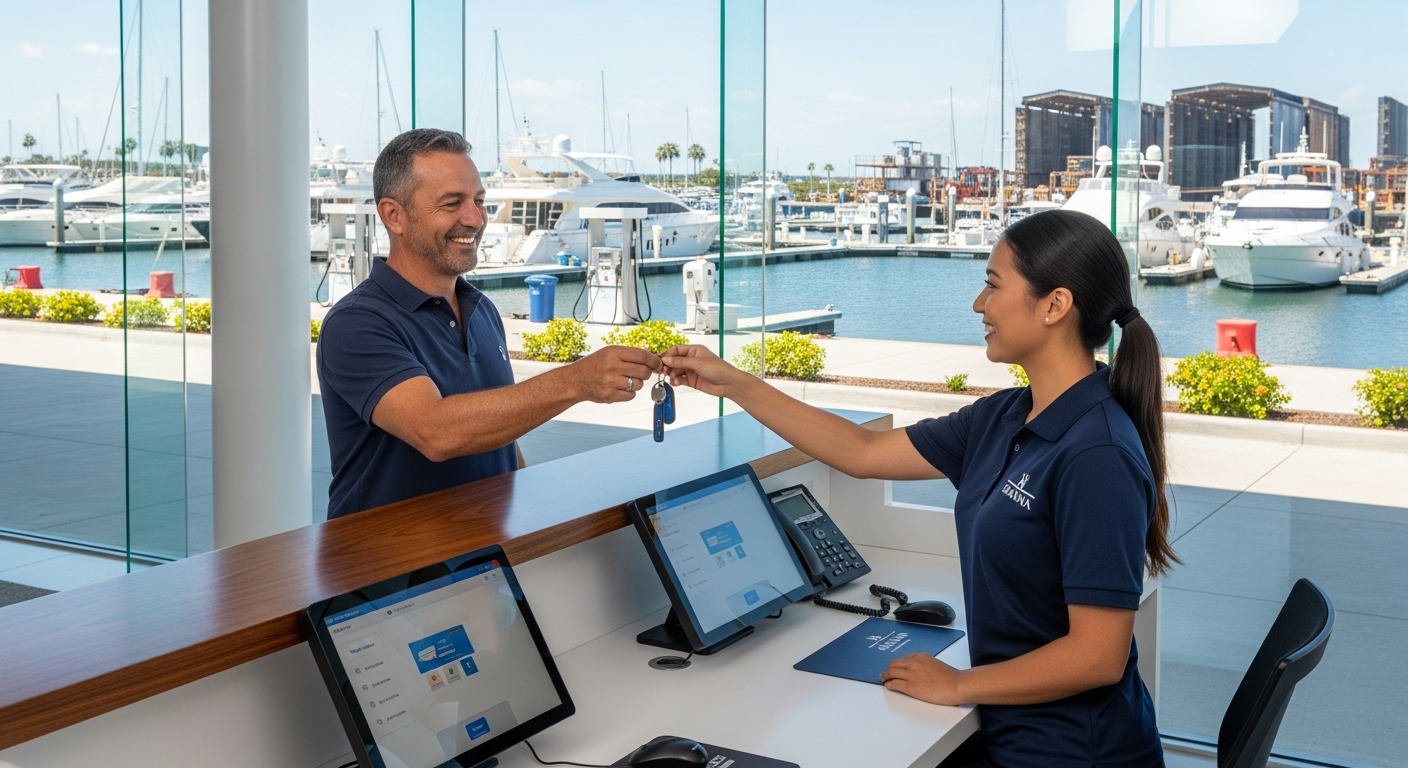
Facility and Infrastructure Maintenance Management
Marina infrastructure represents enormous capital investment: pontoons, pile moorings, electrical systems, water supply networks, fuel facilities, travel lifts, and shore power connections. Keeping this infrastructure operational and well-maintained is critical for safety, regulatory compliance, and customer satisfaction.
Facility maintenance management within marina software provides:
- Planned maintenance schedules — systematic inspection and service programs for all infrastructure components, with automated work order generation
- Defect reporting and tracking — mobile-accessible tools for staff and customers to report facility defects, with work order workflows ensuring nothing is missed
- Contractor management — procurement, work order issue, and cost tracking for external maintenance contractors
- Regulatory compliance tracking — maintaining documentation for ATEX electrical inspections, lifting equipment certifications, environmental compliance, and health and safety requirements
- Asset lifecycle management — tracking the condition and remaining service life of major assets to plan capital expenditure accurately
Planned maintenance programs supported by management software typically reduce reactive (emergency) maintenance spend by 30–40%, as issues are identified and addressed before they become failures. This also extends infrastructure service life, deferring major capital replacement expenditure.
Financial Reporting and Business Intelligence
Marina management is a complex business with multiple revenue streams — berth fees, utility charges, fuel sales, haul-out and yard services, winter storage, chandlery — and significant fixed and variable cost structures. Understanding which revenue streams are truly profitable, how costs vary by season, and how operational performance compares to budget requires financial reporting that most marinas currently lack.
Marina management software consolidates all revenue and operational cost data into business intelligence dashboards that provide:
- Revenue by stream and period — understanding the relative contribution of berth fees, utilities, services, and ancillary revenues to total income
- Occupancy analytics — average occupancy by berth category, seasonal patterns, source of booking, and nationality of customers
- Customer lifetime value analysis — identifying the highest-value annual berth holders and transient customers
- Yield per linear meter — the fundamental marina productivity metric, tracking how effectively the berth inventory is monetized
- Forward revenue visibility — the committed revenue from confirmed future reservations, enabling cash flow planning and staffing decisions
Marinas that operate with real-time financial intelligence consistently make better pricing, staffing, and investment decisions than those relying on monthly management accounts prepared weeks after the fact.
Environmental Compliance and Sustainability Management
Environmental regulation for marinas has intensified significantly in recent years, particularly in the European Union and North America. Anti-pollution requirements, waste management obligations, water quality monitoring, and environmental permitting create administrative burdens that manual systems handle poorly.
Environmental compliance modules in marina management software:
- Track waste management volumes and document compliance with port waste management plans required under MARPOL
- Manage pump-out station operations and record holding tank emptying services
- Monitor and document fuel spill prevention measures and response plans
- Track energy and water consumption across the facility, supporting sustainability reporting and carbon footprint calculation
- Manage environmental permits and notify management of renewal deadlines
Beyond compliance, marinas that can demonstrate strong environmental credentials through documented programs are increasingly attractive to environmentally conscious boat owners who select their marina based on sustainability as well as facilities.
The ROI of Marina Management Software
Marina operators who have implemented modern management software consistently report the following performance improvements:
- Occupancy improvement: 12–20 percentage points for transient berths through online booking and better channel management, representing a direct revenue uplift of 15–25%
- Revenue per berth: 8–15% improvement through dynamic pricing and yield management
- Staff efficiency: 30–40% reduction in administrative time per berth holder through digital self-service and automated invoicing
- Maintenance cost reduction: 25–35% reduction in reactive maintenance spend through planned maintenance programs
- Debtor days reduction: Average debtor days fall from 35–45 days to 12–18 days through automated payment collection and online invoicing
For a marina with 300 berths generating $2.5 million in annual revenue, these combined improvements represent $400,000 to $700,000 in additional annual value against platform costs of $20,000 to $60,000 per year. The return on investment case is straightforward for virtually any marina above 100 berths.
Key Considerations When Choosing Marina Management Software
The marina software market has matured considerably, and several strong platforms now compete for the market. When evaluating options, prioritize these factors:
- Ease of use for non-technical staff — marina office teams are typically hospitality professionals, not IT specialists. The platform must be intuitive without extensive training
- Mobile accessibility — dock masters, maintenance staff, and management need full functionality on mobile devices, not just a desktop-optimized interface
- Integration with payment systems — seamless connectivity with card terminals, bank transfer systems, and accounting software reduces manual reconciliation
- Customer portal quality — the portal is your primary customer-facing digital touchpoint; its quality directly reflects your brand
- Reporting capability — assess whether the platform's reporting tools can answer the specific business questions your management team needs to address
- Vendor support — marina operations run year-round, often in remote locations. Verify that support response times and hours meet your operational requirements
Frequently Asked Questions
How does marina management software handle complex seasonal pricing structures?
Purpose-built marina management platforms support multi-tier pricing structures that accommodate daily, weekly, monthly, and seasonal rates simultaneously, with automated transitions between rate periods. Most platforms also support promotional pricing for specific dates, vessel types, or customer categories — enabling precise yield management strategies without manual rate adjustments.
Can marina software integrate with existing accounting systems?
Leading platforms offer native integrations with popular accounting software including Xero, QuickBooks, and Sage, enabling automated transfer of invoices, payments, and reconciliation data. For marinas using other accounting systems, API-based integrations are typically available. This eliminates double data entry and ensures financial reporting reflects real-time operational data.
Is marina management software suitable for smaller marinas with fewer than 100 berths?
Many platforms, including SupaSailing's marina solution, offer tiered pricing that makes software economically viable for smaller facilities. For a marina with 60–100 berths, the occupancy improvements and administrative efficiency gains from modern software typically generate a positive return within the first operating season. The implementation timeline is also shorter for smaller facilities, typically four to eight weeks from sign-up to full operation.
Conclusion
The margin between high-performing marinas and average-performing ones is increasingly determined by technology. Modern marina management software is not a luxury for large, well-funded facilities — it is the operational foundation that enables any marina to maximize revenue, control costs, and deliver the customer experience that today's boat owners expect.
From real-time berth availability and online booking through to dynamic pricing, customer portals, maintenance management, and financial intelligence, the capabilities of modern platforms are transformative. The question for marina managers in 2025 is not whether to implement management software, but which platform best fits their facility's specific needs and growth aspirations.
SupaSailing's marina management solution is designed for marina operators who want comprehensive functionality, fast implementation, and genuine operational impact. Contact our team to arrange a demonstration and understand how our platform can boost your marina's revenue and streamline your operations.
See SupaSailing in action
Book a free demo call and discover how one platform can run your charter, marina, fleet, shipyard or brokerage.
Book a Free DemoShare this article